
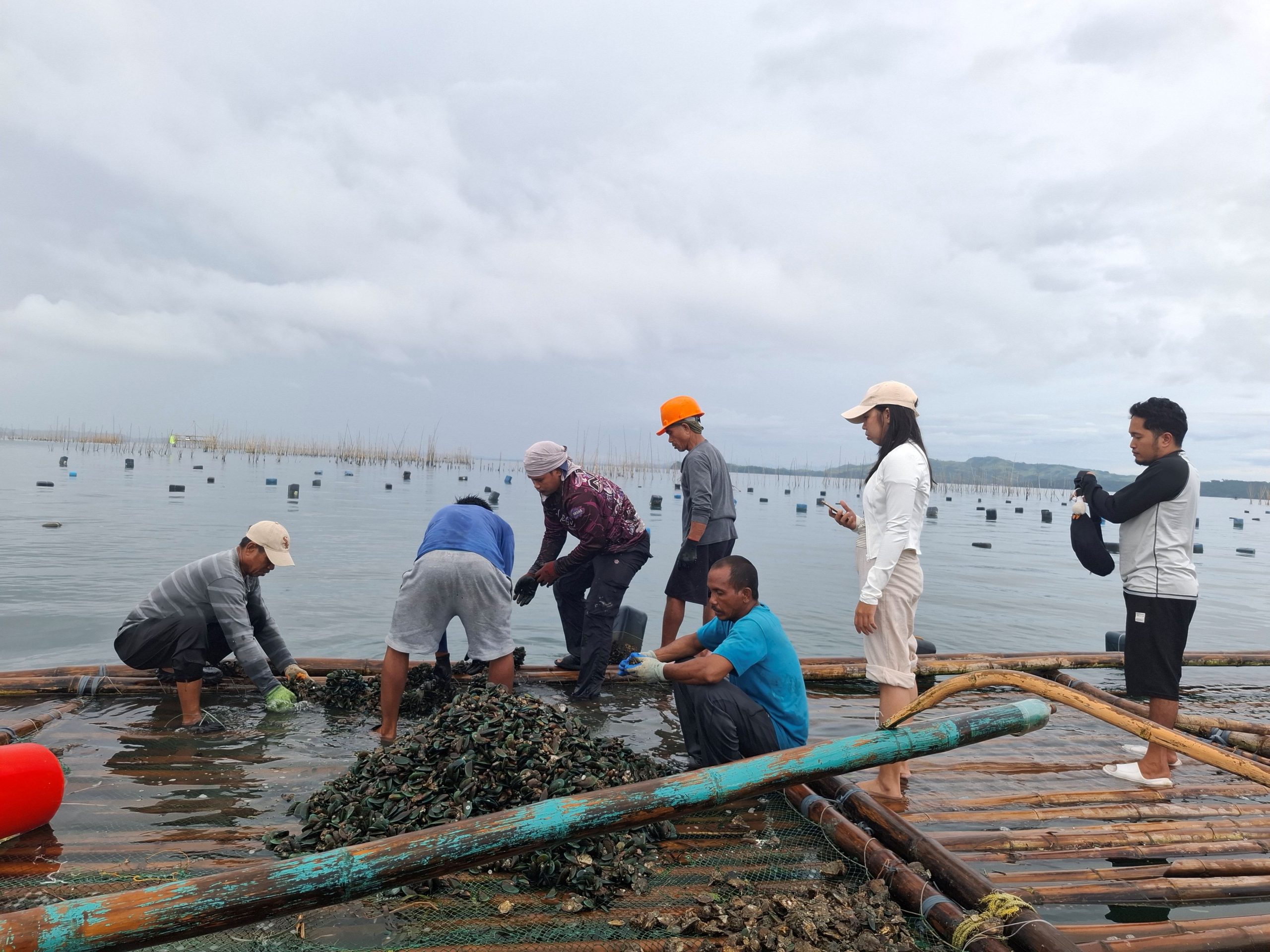
Fisherfolk in coastal communities, including those from Island Barangay Pangdan in Catbalogan City, Samar, are increasingly confronting declining fish catches and unpredictable crab harvests. These challenges stem from multiple pressures include overfishing, seasonal weather disruptions, and the intensifying impacts of climate change. For many households, income remains unstable and highly dependent on environmental conditions, limiting their ability to invest in improved aquaculture systems or diversify their livelihoods.
The Pangdan Fisherfolk Association is among the small-scale fishing groups navigating these realities. One of their primary livelihood activities has long been green mussel cultivation using the traditional bamboo staking method. Widely practiced in shallow waters, this system involves driving bamboo poles vertically into the seabed to provide surfaces for mussels to attach and grow.
Although simple and low-cost, the bamboo staking method presents several limitations. Bamboo poles deteriorate quickly in seawater and require frequent replacement, increasing labor demands and operational costs. The system is also highly vulnerable to strong waves, storms, and typhoons, which can uproot stakes and result in significant crop losses.
Environmental concerns further compound the issue. Dense installations of bamboo stakes can disturb seabed habitats, while accumulated mussel waste beneath culture areas may reduce oxygen levels in sediments. Damaged or abandoned bamboo poles can also become marine debris, posing risks to marine life, navigation, and coastal ecosystems.
From Idea to Implementation
In response to these challenges, the People’s Initiative for Learning and Community Development (PILCD) began exploring pilot aquaculture initiatives in 2022 to introduce more climate-resilient and sustainable livelihood options. The initiative aimed to diversify income sources beyond traditional fishing and crab farming, promote sustainable aquaculture practices, and strengthen community capacity for climate-smart enterprises that could generate more stable earnings.
Through a partnership with Samar State University’s Eastern Visayas Center for Crustacean Research and Development (SSU–EVCCRD), the concept of longline green mussel farming was introduced. While not entirely new in the Philippines, the longline system has demonstrated significantly higher productivity and sustainability compared to the traditional bamboo staking method.
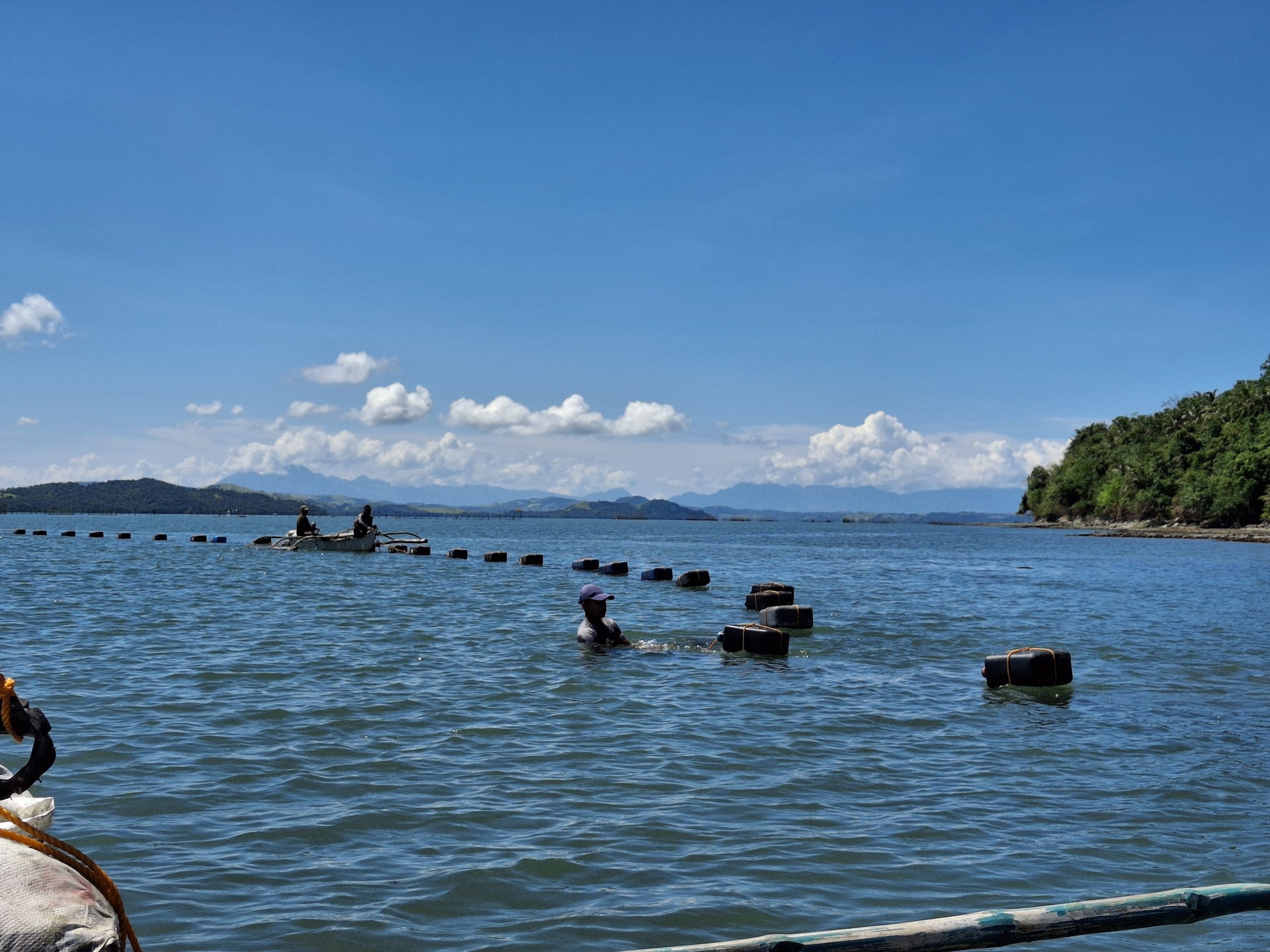
Unlike fixed bamboo stakes, the longline system uses suspended ropes supported by floaters, allowing mussels to grow in deeper, cleaner, and more oxygenated waters. This configuration enhances water circulation, reduces environmental stress, promotes faster growth, and produces higher yields with improved product quality.
The longline mussel culture in Pangdan began as a small pilot project in 2022, implemented by PILCD in partnership with SSU and the Bureau of Fisheries and Aquatic Resources (BFAR). The pilot involved two longlines and was preceded by community consultations, information sessions, and technical training. Initial results showed clear improvements in volume and yield.
For the fisherfolk, the shift brought practical advantages.
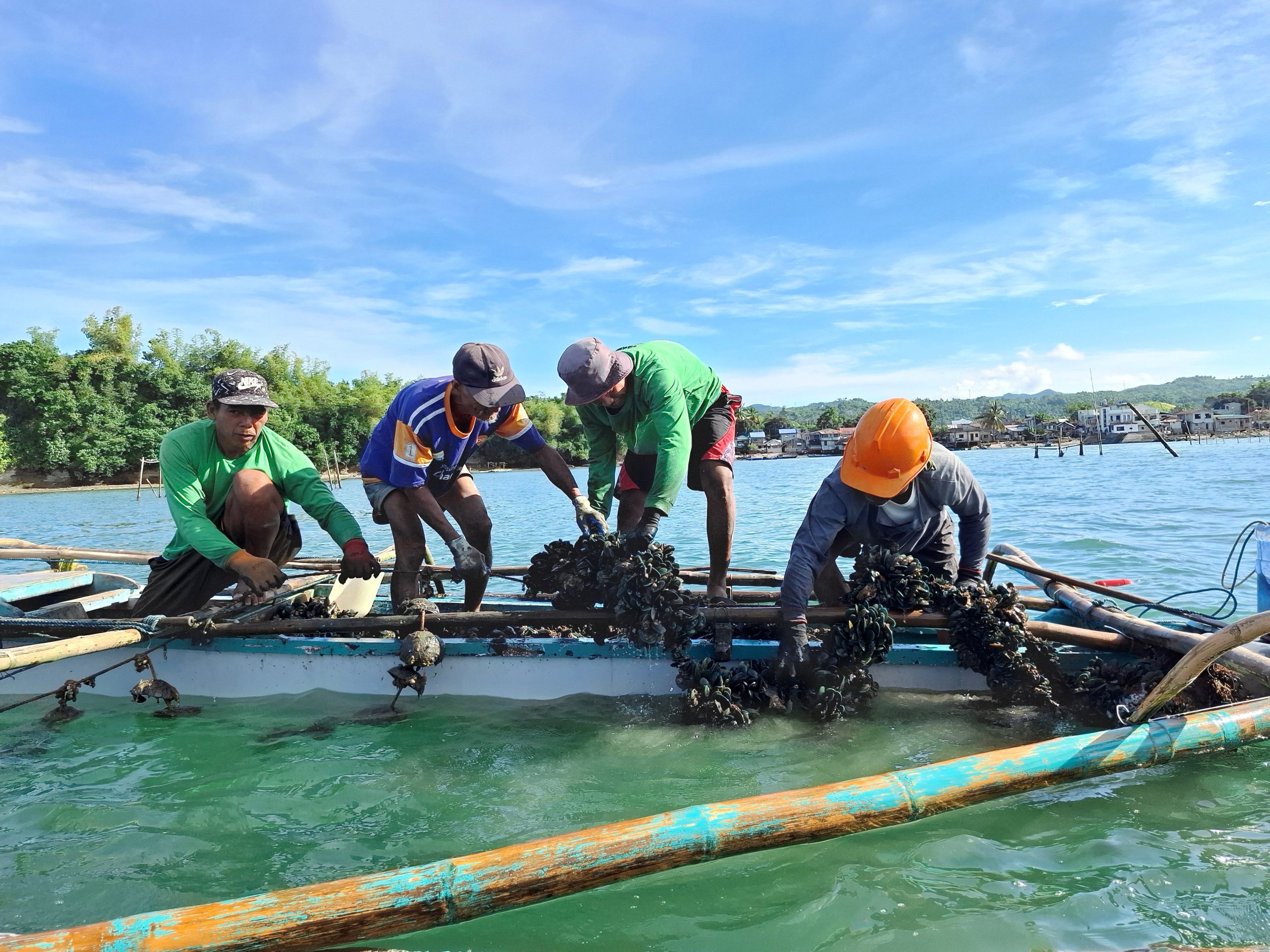
“In terms of maintenance, our experience shows that the longline method is highly resilient to typhoons and unfavorable weather conditions, as long as the anchor lines are properly secured and the number of floaters has been reduced,” shared Carlos Dacaymat, President of the Pangdan Fisherfolk Association.
He also emphasized how the system simplified operations:
“The longline method for green mussel farming makes harvesting much easier than the traditional method, as there is no need for us to dive into the water since the green mussels are already easily accessible.”
Scaling Up and Measurable Results
Encouraged by the pilot’s success, the initiative expanded in 2024 with the installation of four longlines. Technical support from SSU and the Catbalogan City Agriculture Office strengthened the association’s capacity to manage and maintain the system effectively.
The expansion was implemented under the project “Promoting Regional Approaches to Inclusive and Gender-Responsive Disaster Risk Reduction and Climate Adaptation in South and Southeast Asia,” in partnership with ASB and with support from BMZ.
After six months of operation, the longline mussel culture produced 42 sacks of green mussels, generating a gross income of ₱92,200 (approximately €1,328). With total expenses amounting to ₱31,600, covering labor, transportation, meals, and materials, the project achieved a net profit of ₱60,600. Forty percent of the net income was reinvested for expansion, while sixty percent was distributed among association members.
“In fact, this is the highest income we have recorded from green mussel farming through the longline method in just six months’ time,” Dacaymat noted.
Beyond financial gains, the project demonstrated that improved technology, knowledge transfer, and institutional support can significantly enhance resilience and productivity among small-scale fisherfolk.
Knowledge Sharing, Replication, and Lessons Learned
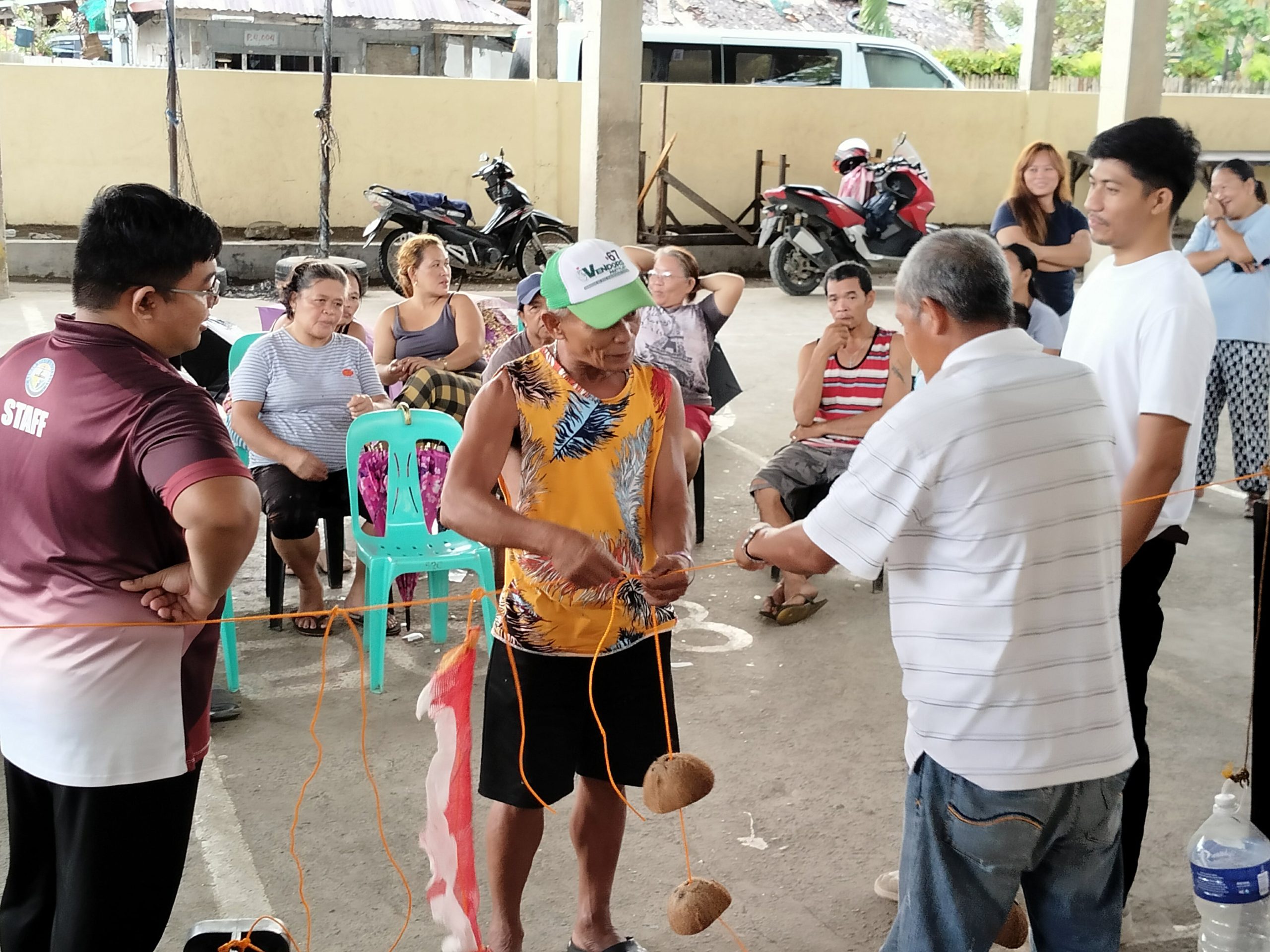
Building on Pangdan’s success, PILCD and SSU–EVCCRD replicated the initiative in a coastal barangay in Calbayog during the first quarter of 2025. A pilot of two longlines was established in an area where mussel culture had not previously been practiced.
An innovation introduced in Calbayog was the use of small bamboo rafts as floaters, replacing the HDPE plastic containers used in Pangdan. Bamboo was selected for its local availability and lower cost, and early monitoring showed promising results in mussel growth and spat settlement.
However, Typhoon Opong struck Calbayog in September, severely damaging the longline setup. The bamboo floaters were dislodged and broken by strong waves and currents. Post-evaluation identified two primary contributing factors: the vulnerability of bamboo materials to typhoon-level wave conditions and the exposure of the site to open-sea wave intensity.
These lessons underscored the importance of using sturdier floatation materials, such as HDPE containers, and reassessing site selection to prioritize more sheltered locations for culture activities.
Following this assessment, a new site was identified in Barangay Tomaligues, Calbayog, in partnership with a local fisherfolk association. Coordination with the City Agriculture Office has been completed, and project setup is scheduled for early 2026.
A Model for Climate-Resilient Coastal Livelihoods
Multi-stakeholder collaboration has been central to the initiative’s progress. Community readiness, technical guidance from SSU–EVCCRD, and regulatory support from local government units at city and barangay levels have all contributed to its advancement.
The experience in Pangdan clearly demonstrated both profitability and environmental sustainability. Compared to the traditional bamboo staking method, the longline system generated significantly higher net income and showed greater resilience to environmental stressors.
For the fisherfolk themselves, the impact extends beyond income.
“This project showed us that even small fisherfolk like us can succeed if given the right knowledge, support, and opportunity,” Dacaymat reflected.
As the Pangdan initiative continues to scale toward a business-level operation, longline green mussel farming stands out as a productive, sustainable, and climate-resilient livelihood model—offering coastal communities a stronger foundation for economic stability in the face of climate uncertainty.
