
Before the sun had fully risen over Southkhali Union, Hashi Rani was already carrying the weight of a question she couldn’t answer: Where will our clean water come from today?
Hashi, 48, lives with her husband Adhiranjan and their children in one of Bangladesh’s most disaster-prone coastal stretches, Sarankhola sub-district of Bagerhat. With no deep tube wells nearby, no reliable freshwater source, and a climate that grows more unforgiving each year, the family’s only option was the murky water of a nearby pond.
She tried everything within reach. She stirred in alum, called Fitkari in the local tongue, hoping it would settle the danger out of the water. Sometimes she boiled it. But firewood costs money a daily laborer’s family simply doesn’t have. And burning wood came with its own quiet cost: the trees, the air, the future.
The water stayed unsafe. Her children fell sick. Her husband’s wages, already stretched thin, disappeared into doctor visits and medicine. It was a cycle with no visible exit. Poverty feeding illness, illness feeding poverty, season after season. Hashi often thought that she and her family would never be able to escape this vicious cycle.
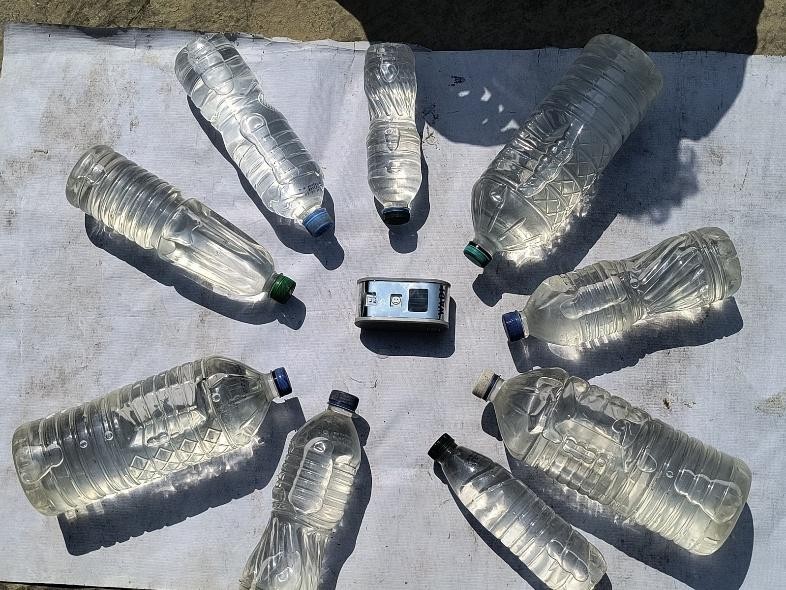
Then CDD arrived in Sarankhola with something that seemed almost too simple to be true: a small device that uses sunlight to make water safe to drink. No fire. No fuel. No chemicals. Just light, the one thing the coastal sun offers without condition.
It’s called the WADI Device, introduced through the ECT-WASH project. The technology works by measuring UV radiation from the sun and signaling when the water has been sufficiently disinfected. Hashi received training, then a device of her own.
Now, her mornings are different. She lines up her water bottles in the sun, places the WADI device among them, and waits. No smoke. No expense. No worry.
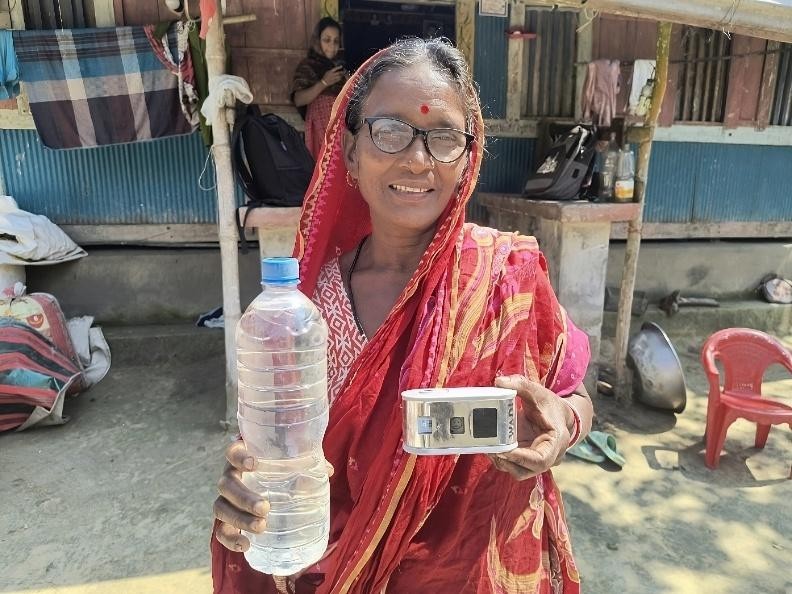
“With just sunlight, I can easily ensure safe drinking water for my family. We no longer suffer from waterborne diseases as before, and since our medical and fuel costs have decreased, we can now save some money. Something I couldn’t even imagine before.” said Hashi Rani.
The illnesses have eased. The hospital bills have shrunk. And for the first time in years, a small amount of money stays in the household at the end of each month. Not much, but enough to feel like something has fundamentally shifted.
For Hashi Rani, the WADI Device is not just a tool. It is proof that a problem as old as her memory, unsafe water, can be solved with something as free and abundant as the sun. In a community where so much is uncertain, that certainty has become, as she puts it, another name for peace of mind.
