
For years, Mirza Pratiwi viewed her role at the Magelang Regency Disaster Management Agency (BPBD) through a predominantly administrative lens. Armed with a Bachelor’s degree in Economics, her daily routine since 2016 has revolved around the quiet, structured world of numbers, planning spreadsheets, and background coordination. Even after being appointed as a permanent Civil Servant in the Prevention and Preparedness Division in 2024, she mostly stood in the background, anchoring coordination meetings and occasionally serving as a Master of Ceremonies.
Like many, Mirza used to naturally associate disaster management with the frantic chaos of emergency response—the actions taken after disaster strikes. She had little experience in the field as a facilitator, and the idea of leading community discussions made her doubt her own confidence.
Then came the Seger Waras Programme, implemented by ASB S-SEA as part of the global ECT WASH Programme. In Indonesia, the programme is implemented in Magelang and Gunungkidul District, with funding from the German Federal Foreign Office and Aktion Deutschland Hilft.
The Turning Point
In September 2025, Mirza was introduced to the concept of Anticipatory Action (AA) and the Early Action Protocol (EAP). The philosophy was simple yet profound: instead of waiting for a disaster to hit and then managing the wreckage, communities can use early warning data to act before the disaster happens, dramatically reducing human and economic losses.
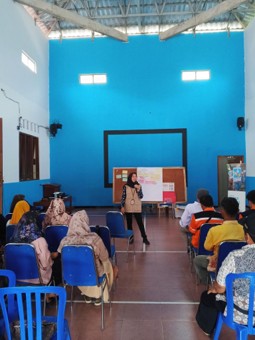
Though she initially battled a wave of self-doubt due to her limited public-speaking and facilitation experience, Mirza accepted an invitation to serve as a field facilitator. She stepped out of her office comfort zone and walked directly into the villages of Giritengah and Ngadiharjo to help local residents map out their own Early Action Protocols.
“I found the activities very enjoyable, meaningful, and rewarding,” Mirza recalls. “The programme provided me with an opportunity to learn while actively serving as a facilitator, which helped me strengthen both my knowledge and practical experience.”
When Theory Met Reality
The true validation of Mirza’s transformation—and the ultimate test of the programme—came in January 2026.
After days of relentless, torrential rainfall in Ngadiharjo Village, the Early Warning System (EWS) hit its critical threshold. The risk of a devastating landslide was imminent. But this time, there was no panic. Because of the Anticipatory Action protocols Mirza had helped facilitate, local authorities, village volunteers, and disaster risk groups sprung into a synchronized, pre-planned rhythm.
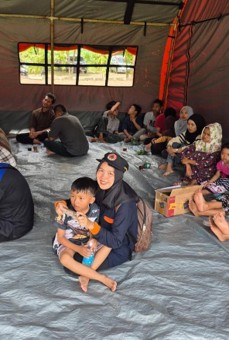
Before the mud could slide, more than 150 vulnerable villagers were safely evacuated to secure locations. No lives were lost. “Witnessing how early warning information triggered timely action and helped protect vulnerable communities strengthened my belief in the value of anticipatory action,” Mirza says.
A Lasting Legacy within BPBD
The change in Mirza is not just internal; it is structural. Today, she is no longer just a passive listener in bureaucratic meetings. She has become a vocal advocate for proactive resilience.
As Anticipatory Action is still a relatively new concept within BPBD Magelang, Mirza has bridged her field experience with her background in planning. She has actively
engaged with the Planning Division to ensure these life-saving Early Action Protocols are not just temporary project-run ideas, but are systematically integrated into BPBD Magelang’s Strategic Plan (Renstra) for 2028.
From a quiet administrative staff member to an empowered facilitator conducting safety sessions in schools and pitching strategic shifts to the Head of BPBD, Mirza’s journey embodies the tagline of the ECT WASH program: Strong Community, Strong Environment.
By shifting her own mindset from reactive response to anticipatory action, Mirza Pratiwi is helping rewrite the future of disaster management in Magelang Regency—one safe village at any given time.
