
In two villages tucked along the coast of South Lampung, Indonesia, a quiet transformation is taking root. Since late 2025, ASB South and South-East Asia working alongside its organisation partner Perkumpulan Paluma Nusantara and funded by German Federal Ministry for Economic Cooperation and Development (BMZ). We have been laying the groundwork for Green Pro (Pioneers for a Green Future: Green Income Prospects for Marginalised Young People), a three-year programme (September 2025–August 2028) running across Indonesia, the Philippines, and Nepal.
In Indonesia, Green Pro has found its home in Totoharjo Village (Bakauheni Sub-district) and Kunjir Village (Rajabasa Sub-district). These two communities have real economic potential in agriculture, fisheries, and local enterprise, but young people, including young people with disabilities, have often had limited pathways into sustainable livelihoods.
Building Bridges with Local Government

Before a single seed was planted, the Paluma Nusantara team spent weeks meeting with local government offices including the Department of Food Crops, Horticulture and Plantations (TPHBUN), the Regional Development Planning Agency (Bappeda), the Department of Community and Village Empowerment (DPMD), and the Department of Livestock and Animal Health (DPKH), among others.
These early conversations shaped the programme’s direction. TPHBUN expressed interest in applying organic farming methods in educational gardens. DPMD saw an opportunity to develop eco-education tourism rooted in local wisdom and village storytelling. DPKH backed a proposed Boer goat initiative using cacao waste as livestock feed. And South Lampung’s Regional Secretary, Supriyanto, welcomed the programme as a chance for genuine collaboration between civil society and local government, a sentiment echoed by Green Pro Program Officer Yuwono, who noted the programme’s alignment with the Regent’s vision of developing an eco-tourism triangle across the district.
A Formal Launch, A Shared Commitment
Green Pro was formally launched at Bappeda’s Rimau Hall in South Lampung, bringing together government representatives, young people, and community members — including people with disabilities — from across the district. Paluma Nusantara’s Project Manager, Umi Azizah, framed the programme’s ambition clearly: to ensure young people are not simply bystanders to climate change, but active agents shaping the solutions.
The programme identified six priority green sectors for youth-led enterprise: sustainable agriculture; environmentally friendly livestock and fisheries; nature- and culture-based eco-tourism; digital marketing for green products; renewable energy; and waste recycling management. As Program Officer Yuwono explained, the approach is deliberately collaborative, local government ensures alignment with development policy and the Sustainable Development Goals, the private sector opens market access, and Paluma Nusantara provides grassroots mentorship.
Meeting the Community Where They Are
What followed was a series of village-level conversations designed to build trust before building enterprises. Socialisation sessions at the village halls of Kunjir and Totoharjo drew 34 and 29 participants include village heads, farmers, fishers, youth groups, and local cooperative members, all weighing what a green economy might mean for their own communities.
The response was warm. Kunjir’s village head, Rio Imanda, spoke of pride in being selected for a second collaborative programme, determined this time to see its full benefits reach the wider community. In Totoharjo, sub-district officials pointed to Paluma Nusantara’s track record on women’s empowerment, child protection, environment, and micro-enterprise as reason for their full support.
Training the Trainers
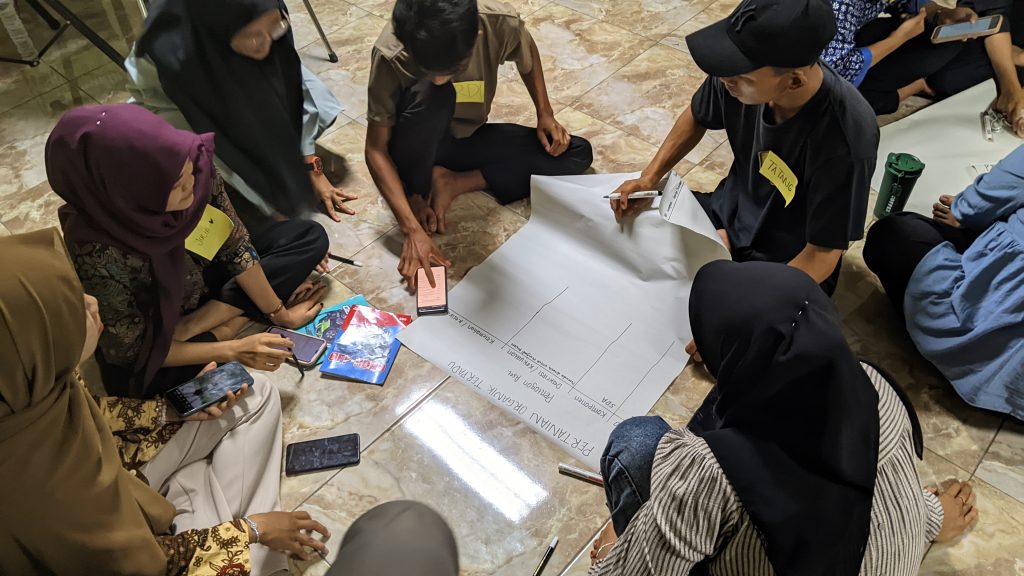
To sustain momentum at the grassroots level, 27 village volunteers took part in a three-day Training of Trainers, covering everything from Participatory Rural Appraisal and Focus Group Discussion techniques to household data collection using the Washington Group Questions (WGQ). WGQ is a tool for identifying people with disabilities in survey data. Just as importantly, the training built volunteers’ understanding of how to interact respectfully and inclusively with people with disabilities, alongside sessions on Prevention of Sexual Exploitation, Abuse, and Harassment (PSEAH) and the programme’s Climate Charter.
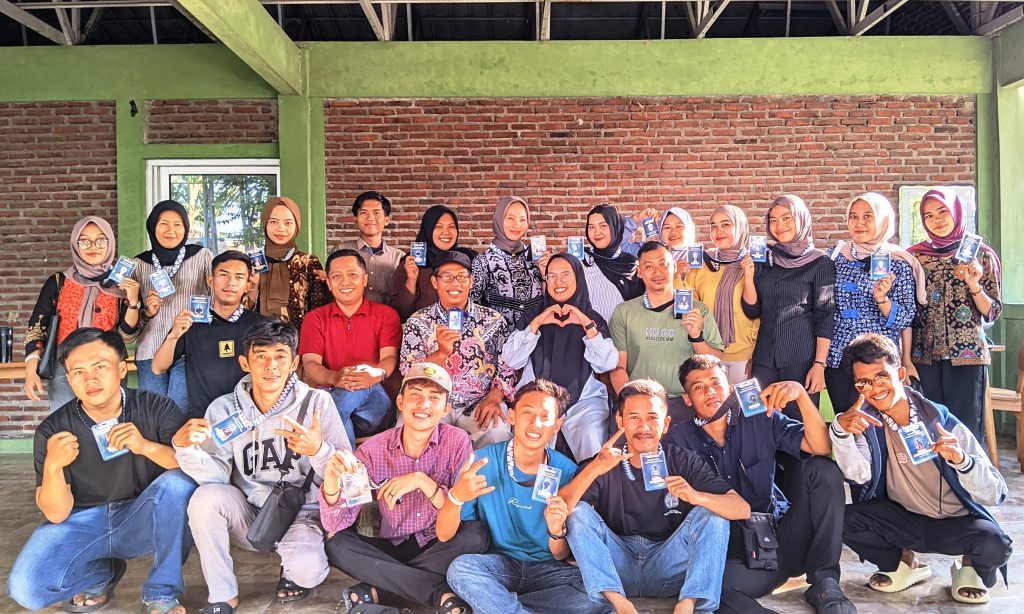
These volunteers would go on to become the backbone of the programme’s outreach, the people knocking on doors, holding conversations in coffee shops, and rotating meetings between participants’ homes when formal village-hall gatherings proved too intimidating for young people to attend.
From Conversation to Concrete Plans

By January 2026, informal “coffee chat” workshops, locally dubbed Ngopi Bareng, Rancang Usaha Anak Muda (“Coffee with Young People, Designing Youth Enterprise”) had translated community discussions into concrete business plans. In Totoharjo, ideas ranged from lazy-garden greenhouses and goat farming to trigona honey cultivation and renewable energy development. In Kunjir, young people and village officials mapped out organic farming of premium melons and edamame using greenhouse and smart-irrigation systems, a community waste bank, solar and wind energy packages, and banana-based food processing. All grounded in a shared recognition that market research needed to come first.
Tourism, Waste, and the Long Road Ahead
Green Pro’s ambitions have also connected with South Lampung’s broader development priorities. With roughly 1.5 million tourists visiting the district each year. Paluma Nusantara has worked with Bappeda to explore educational tourism as a way of encouraging visitors to stay longer, directly benefiting local economies.
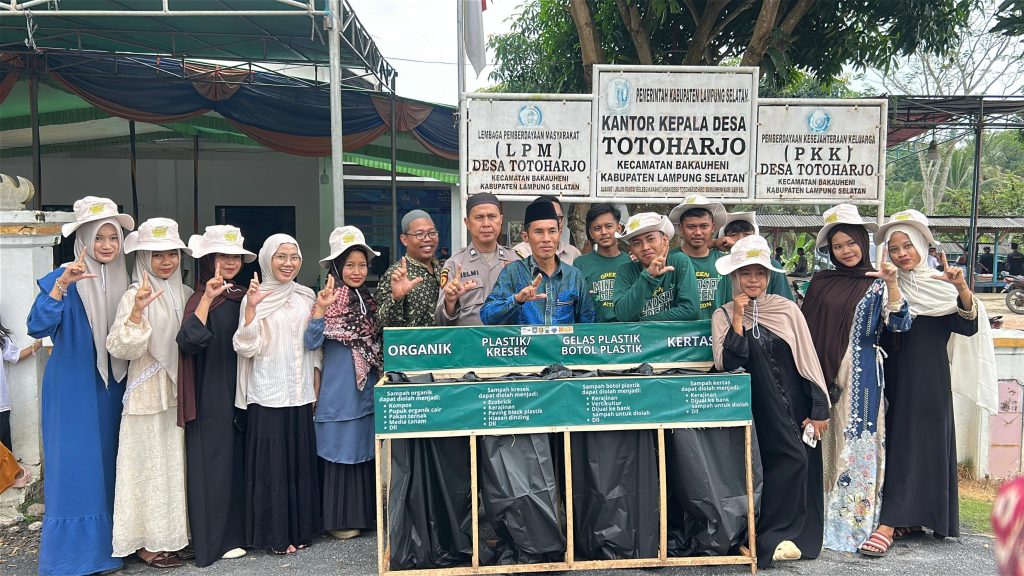
That same spirit of practical, community-rooted action was visible when Totoharjo celebrated its 94th anniversary in June 2026. Alongside cultural and spiritual festivities, Green Pro’s young volunteers took the lead in waste management. They are sorting bins for organic waste, plastic, and paper, demonstrating compost-making using stacked buckets, and educating attendees on the spot. It was a small but telling example of how the programme’s early investments in youth leadership were beginning to show up in everyday community life, also work that also aligned with the district’s own Desa Helau (Clean Village) initiative.
Nearly a year into Green Pro, the infrastructure of collaboration such as government buy-in, trained volunteers, community-designed business plans, is firmly in place. What comes next is turning that foundation into livelihoods that last.
