
Village communities are now taking the lead as key actors in hydrometeorological disaster preparedness, rather than merely being recipients of aid. This major shift is driven by the Anticipatory Action Protocol, which has been introduced and instilled in villages through the Seger Waras Programme. This programme forms part of the global ECT WASH programme, which is being implemented in 14 countries and contexts, and is funded by the German Federal Foreign Office and Aktion Deutschland Hilft.
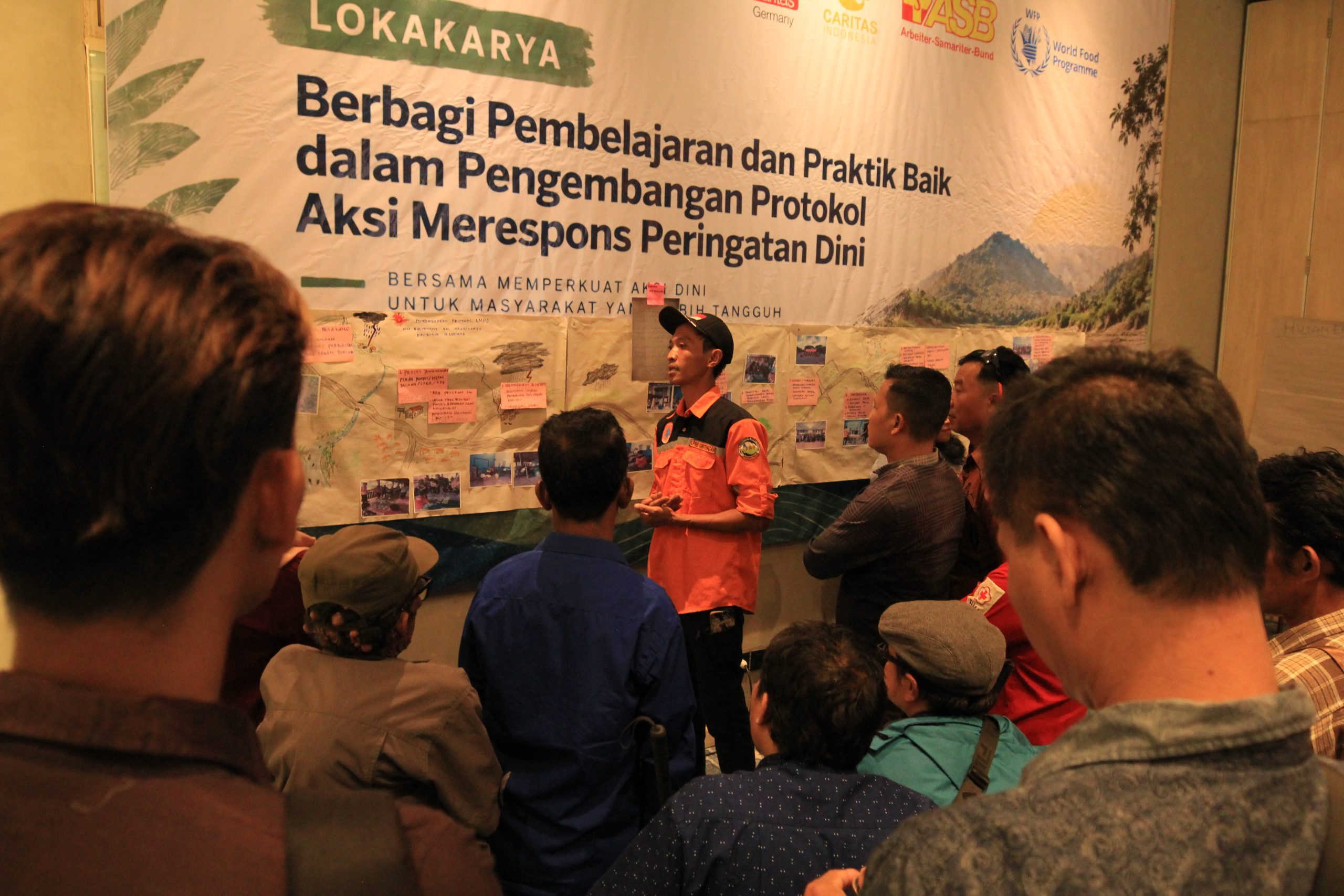
This extraordinary role in building community-based resilience led representatives of communities, groups of people with disabilities, and the Disaster Risk Reduction Forum (FPRB) from Girisuko Village, Ngadiharjo Village, and Giritengah Village to present at a national-level foru m: ‘Sharing Lessons Learnt and Best Practices in the Development of Anticipatory Action (AA) Protocols’. This event was organised by the National AA Working Group in Yogyakarta on 23–24 September 2026.
Before representatives from ministries and state agencies such as the National Disaster Management Agency (BNPB), the Coordinating Ministry for Human Development and Culture (Kemenko PMK), and the Meteorology, Climatology, and Geophysics Agency (BMKG), these village champions shared their firsthand experiences in designing and implementing inclusive Anticipatory Action Protocol. They demonstrated that early actions tailored to local risks ranging from droughts and extreme rainfall to landslides can save lives and protect residents’ livelihoods.
Preparedness for the Dry Season: Implementation of the Drought Anticipatory Action Protocol in Giri Suko Village
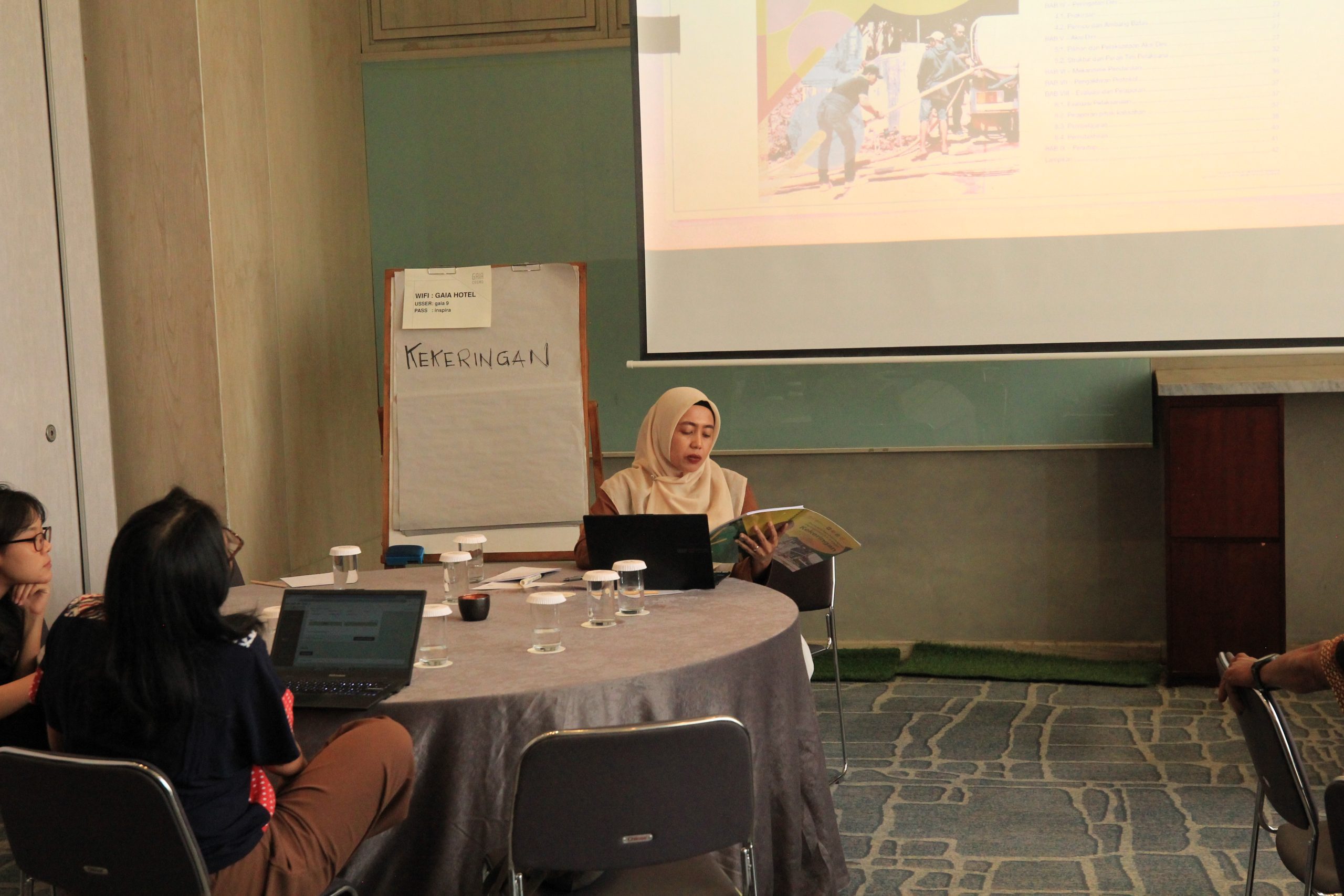
As one of the participating villages in the Seger Waras Programme, Girisuko Village attended this national workshop to share their success in developing the Drought Anticipatory Action Protocol to overcome their annual water crisis. Representing the resilience of her residents at the forum, Triani recounted the real conditions on the ground: “Especially knowing that there has been no rain at all for the past 6 months, the impact is immense, particularly in Girisuko Village.”. Through the guidance of the Seger Waras Program, the villagers can now independently map threats based on days without rain (HTH). At the forum, they outlined the village’s four threat levels: Normal (5-20 days without rain), Advisory (21-30 days, with 30% of residents buying water), Watch (31-60 days, 50% buying water), to Warning (more than 60 days and >70% buying water). It is at this Warning level that clean water distribution and health services are immediately activated for all residents.
Before the national audience, the Girisuko representative also proudly affirmed their village’s commitment to inclusivity: “In developing this Anticipatory Action protocol, we also took an approach aimed at ensuring that everyone, without exception, gains access and participates, has control, and receives the same benefits.”. Furthermore, they honestly shared the challenges still faced in the field, ranging from limited disaggregated data, a lack of communal water tanks and transport fleets, to the hilly topography that complicates water distribution. The villagers also shared how prioritizing water for human consumption impacts the threat of crop failure in agriculture and a shortage of livestock feed, a situation the community is now slowly overcoming through initiatives to independently store feed reserves.
Preparedness for Landslide Threats: Implementation of the Anticipatory Action Protocol
Ngadiharjo Village: “Si Pendil” Innovation and Inclusive Mapping in Tanjung Hamlet
The experience of the Ngadiharjo Village community in facing the landslide threat in Tanjung Hamlet became one of the main highlights shared in the forum. Through the intervention of the Seger Waras Programme, the village presented their success in responding to the characteristics of the orange clay soil, which is highly sensitive to rainwater. They collaborated with researchers from the Department of Geography at Gadjah Mada University (UGM) on the development of Si Pendil that helps residents set a rainfall threshold of 70 mm as an indicator for evacuation, as this figure has historically proven to trigger severe landslides in their area.
On the workshop stage, Ngadiharjo community members presented how they pioneered an inclusive approach through a village risk map. The map specifically includes logos indicating the locations of houses of persons with disabilities, the type of their impairments, and their positions within the shaded landslide-prone areas. They proved that a citizen-based warning system combining automatic sirens, battery-based sirens, traditional wooden bells (kentongan), and WhatsApp groups was successfully tested in an Anticipatory Action simulation on November 25, alongside BPBD, Social Services, PMI, and ASB. Nevertheless, they also shared important lessons regarding village constraints, particularly the difficulty of maintaining the accuracy of monthly data updates for highly dynamic vulnerable groups, such as pregnant women, toddlers, and the elderly.
Giritengah Village: Synergy of “Pranoto Mongso” Local Wisdom and Weather Data
Equally inspiring, representatives of Giritengah Village also brought their local wisdom narrative to provide lessons at the national level. Fully supported by the Seger Waras Programme, Giritengah community members demonstrated that modern disaster data can synergize with ancestral traditions. To national stakeholders, they explained the characteristics of their village’s reddish clay soil, which is stronger at holding water, thereby setting a higher rainfall standby threshold of 90 mm, measured using a manual rain gauge (ombrometer).
The uniqueness they proudly shared at the national forum was how this weather data is combined with pranoto mongso (the Javanese season calendar) and weton (the Javanese market cycle) calculations to predict the eight-year disaster cycle, such as the flashback to the 1992 landslide. These preparedness messages are even creatively socialized through the traditional ketoprak art form so that residents can easily remember them. In their presentation, Giritengah inspired other villages with their tiered communication flow from the FPRB to the Hamlet Heads, concrete evidence of integrating Anticipatory Action funding into the Village Budget (APBDes), and inclusive actions born from directly listening to the specific needs of residents, such as providing walking sticks for persons with disabilities rather than forcing irrelevant wheelchair assistance.
In conclusion, the presence of these village representatives on the national stage offers one crucial takeaway: grassroots communities possess extraordinary capacity and innovation in leading disaster mitigation efforts when given the right platform and guidance. Their performance proved that preparedness protocols born from within the village such as those facilitated by the Seger Waras Programme are far more effective because they are deeply rooted in local wisdom, uphold inclusivity, and truly understand the specific threat contexts of their own regions. The milestones of Girisuko, Ngadiharjo, and Giritengah villages ultimately send a strong message to national stakeholders that to build genuine disaster resilience in Indonesia, the most fundamental step is to empower, facilitate, and directly listen to the voices of the villages.
