
In Gebang Hamlet, Girisuko Village, Gunungkidul District, Indonesia, mornings used to begin with calculations.
How much water was left in the storage tank. Whether it would last until the next delivery truck came. Which chores could wait, and which could not.
For families in this small hamlet, water was never simply something you turned on. It was something you searched for, saved carefully, and often paid dearly for, especially during the long dry season when the land turned pale and cracked. One truck of water could cost up to IDR 180,000 and might only last a week or two. For households with livestock, the need was even greater.
Yet beneath the limestone hills surrounding the village, an underground spring had been flowing quietly for years.
Hidden deep inside Wuluh Kumet Cave, the water was close enough to hear in the cave’s echoing chambers, but far beyond reach for most of the community. It had been surveyed before, promised before, and talked about for generations. Each time, hope rose. Each time, it faded again.
For many people of Gebang Hamlet, the spring became a symbol of both abundance and frustration: a source of life that felt impossibly distant.
Until the village decided to try once more. This time, together.
A Long Road of Waiting
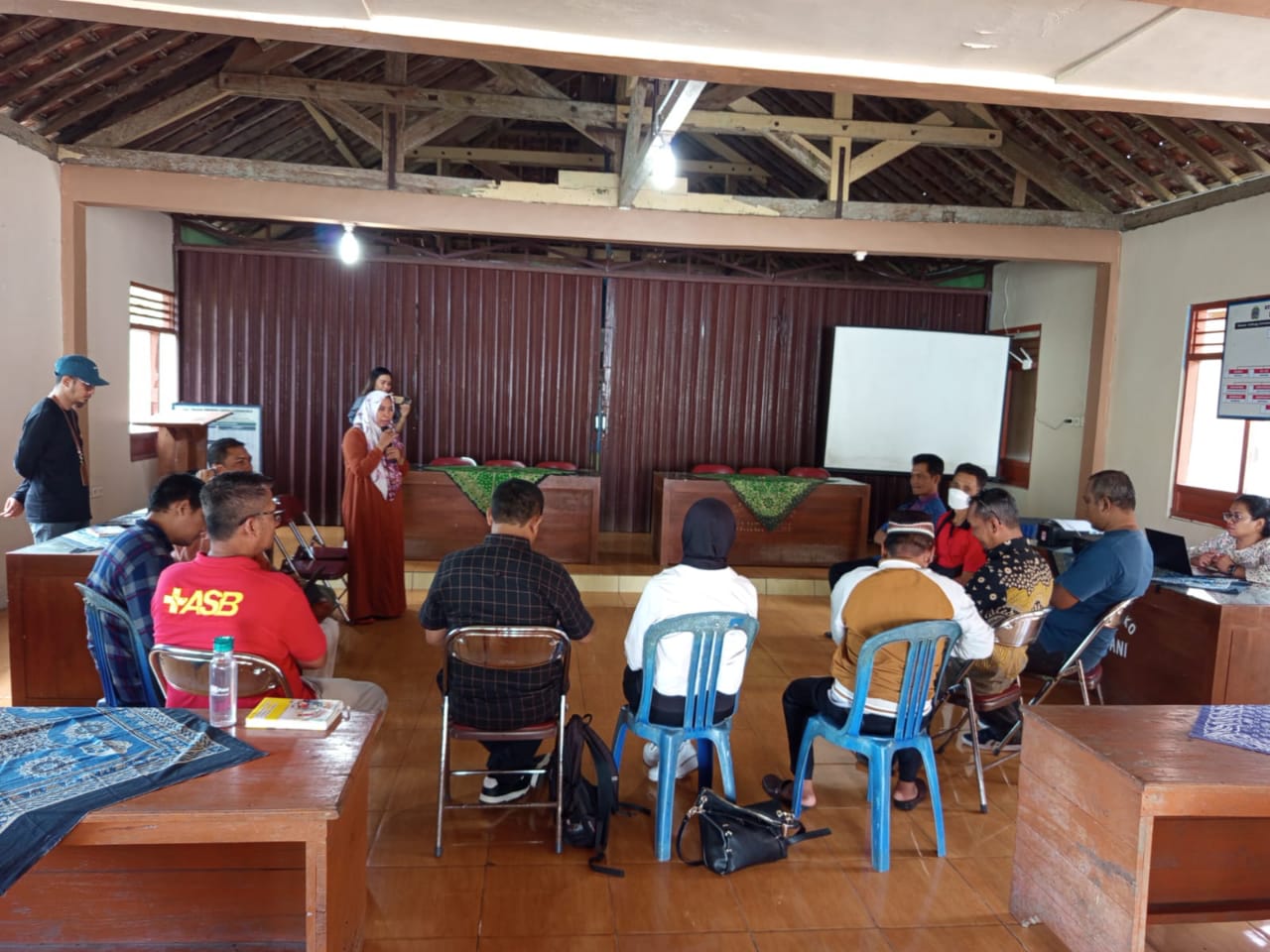
Girisuko Village is made up of nine hamlets. While some still had access to surface water, Gebang Hamlet stood out as one of the most vulnerable. The terrain made shallow wells impossible, and existing pipelines from earlier government efforts never fully reached the area.
Over the years, various plans emerged through local government proposals, development programs, even discussions with the regional water company. But obstacles kept piling up. The cave sits in a protected forest area and within a sensitive karst ecosystem, which means complex permits and environmental regulations. When COVID-19 hit, momentum faded once more.
For many people, it began to feel like water from Wuluh Kumet Cave was a beautiful idea that would never become reality.
Still, the community did not give up.
Choosing to Start Themselves
Instead of waiting for large institutions to act, village leaders and residents began exploring what they could do on their own. Through discussions at the village level, Gebang Hamlet was prioritized as the hamlet most in need. The village-owned enterprise (BUMKal) formed a technical team made up of local representatives, village officials, and community members.
Around this time, ASB South and South-East Asia (ASB S-SEA) began supporting Girisuko through the Seger Waras programme as part of the global ECT WASH initiative implemented across 14 countries, supported by the German Federal Foreign Office and Action Deutschland Hilft. Rather than bringing ready-made solutions, the program worked alongside local structures, helping communities identify priorities and navigate complex processes.
One of the biggest hurdles was permitting.
“Because the spring is inside a karst area and a production forest zone, the permits took almost a year. Even the environmental offices said they had never handled a case like this, taking water from inside a cave for community use.” Fahrunisaa Kadir (Nisa) as the Project Officer explained.
This long permit process started in early 2025.
The village had to coordinate with environmental agencies, clarify that the water would be used purely for community needs, not commercial purposes, and go through the national online licensing system.
“There were many discussions about which category of permit to use,” Nisa said. “Even the agencies had rarely handled a case like this, taking water from inside a cave in a protected area.”
But step by step, the permissions were finally secured.
Going Underground
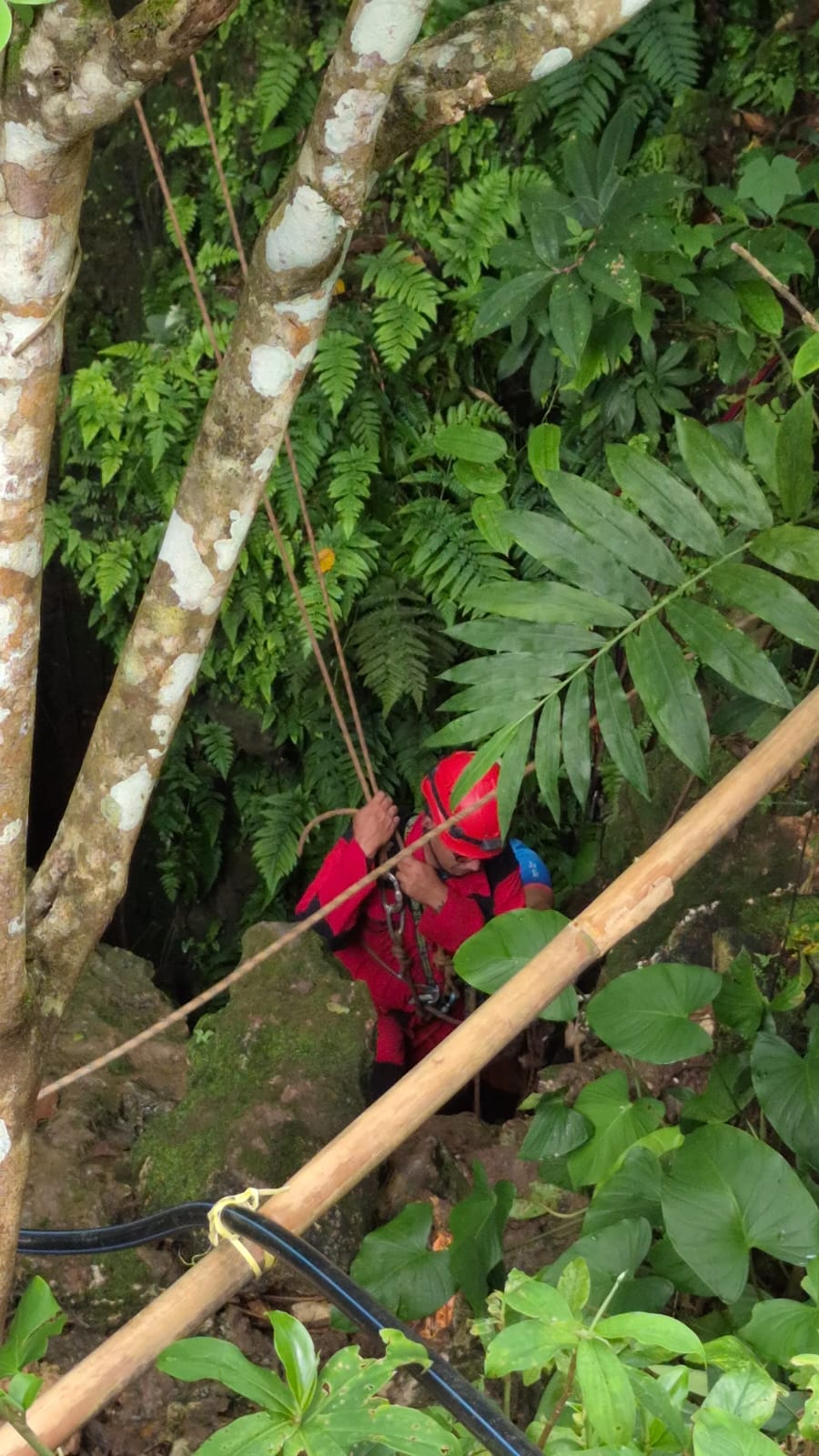
The next challenge was technical: how to lift water from deep inside a cave.
ASB S-SEA through Seger Waras programme supported the process by connecting the village with experienced cave explorers and technical experts, Kamajaya. Together with community volunteers, they descended into Wuluh Kumet Cave, installing submersible pumps in the underground stream.
The system was carefully designed. Water is first pumped from the cave up to a holding tank near the cave mouth, where it passes through natural filtration layers of gravel and fibers. From there, a second pump pushes the water over one kilometer to a reservoir above the settlement.
From this reservoir, the plan is to later distribute water through main pipelines to homes across Gebang’s western and eastern blocks.
For now, reaching the reservoir itself was already a major victory.
The Power of Gotong Royong
Throughout construction, the spirit of gotong royong—collective community work—was everywhere.
“This wasn’t just built by the technical team or the village enterprise. The people of Gebang Hamlet worked together. Some as builders, others volunteering their labor. The whole community took part in making this water system happen.”
There were also many other people standing ready during pumping operations, helping pull teams up from the cave using ropes.
It was physically exhausting and emotionally tense.
The first attempt to lift water did not succeed. Neither did the second right away.
“Hope would rise, then fall,” Wahyu as the Village Secretary said. “We were always worried, what if it fails again?”
But in January, during another operation, something finally changed.
Water surged up.
When the Water Finally Came
As clear water poured into the tanks for the first time in mid January 2026, disbelief turned into joy.
“When the water finally came up, people were overwhelmed with gratitude. Some cried, some laughed, and many immediately bathed under the flowing water. It felt unreal. For so long the water was right there, but it felt so far away.” Nisa Said.
For women in particular, who often carry the daily burden of managing household water, the moment was deeply emotional.
“Water is life,” Wahyu said. “As a woman and as a village official, I’ve seen how hard people struggled just to meet this basic need. Now, it finally feels closer and easier.”
Not the End, But a New Beginning
Although the water has reached the reservoir, the journey is not finished. The next phase involves building household connections so water can flow directly into homes. ASB S-SEA through Seger Waras programme and the village are now coordinating with government programmes and potential partners to support this final distribution network.
There are also plans for training community members in system operation and maintenance to ensure the pumps, solar panels, and filtration systems can be managed sustainably by the community itself. Young people are even being introduced to basic caving and technical skills, so future maintenance doesn’t depend on outside experts.
More Than Infrastructure
The water system in Gebang Hamlet is not just about pipes and pumps. It represents years of patience, collective effort, and community determination.
It shows what can happen when people stop waiting for solutions and instead become part of building them, supported by organisations like ASB S-SEA that focus on strengthening local capacity rather than replacing it.
From navigating complex permits to hauling equipment through a cave, every step was shaped by collaboration.
What once felt impossible is now flowing steadily into a reservoir above the village.
Soon, if all goes well, it will flow directly into homes.
And for the people of Gebang Hamlet, water will no longer be a daily struggle. It is a shared victory, drawn from deep within the earth they have always called home.
