
In island communities such as Darahuway Daco, Mombon, and Rama in Catbalogan City, Samar, women play a crucial role not only in managing households and caring for their families, but also in supporting their families’ financial needs and livelihoods. Despite this, opportunities for sustainable and independent income generation remain limited. Many women are highly dependent on their spouses’ earnings, largely because their time and energy are devoted to meeting the daily needs of their children and families.
This dependence becomes even more challenging in fishing communities, where income is seasonal and unpredictable. As fishing yields fluctuate and access to stable employment remains scarce, diversifying livelihood sources has become essential to strengthening household resilience – particularly for women, who often bear the brunt of economic uncertainty.
In Island Barangay Mombon, part of the Sierra group of islands, the women’s organisation was initially formed in 2021 with only seven members. The group was organised primarily to comply with barangay requirements for a women’s association. Unfortunately, it remained inactive for a long period, lacking clear direction, leadership, and livelihood initiatives.
“So far, our association now has a total of 22 members, thanks to the continuous support and assistance provided by PILCD.” – Ms. Jineth Ogan (President, Mombon Women’s Organisation)
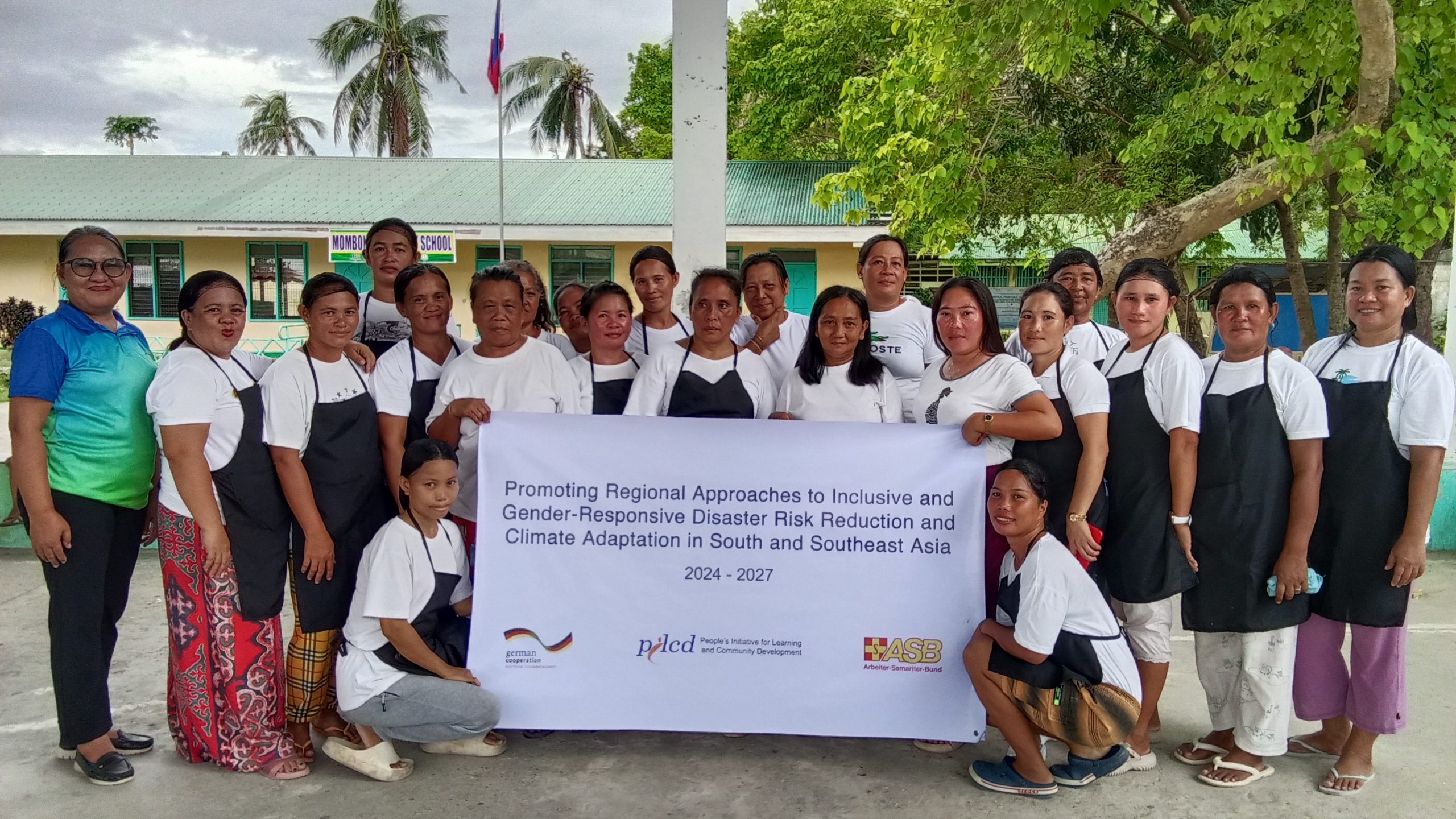
In 2022, when the People’s Initiative for Learning and Community Development (PILCD) began engaging with the organisation, the group took its first steps toward economic activity through rice trading, with PILCD providing rice as initial capital. They also explored small buy-and-sell ventures involving frozen goods.
“Actually, the rice trading and buy-and-sell business gave us the opportunity to learn and grow in the field of business. We experienced firsthand how a small enterprise operates and how it should be properly managed.” – Ms. Jineth Ogan (President, Mombon Womens Organization)
Recognising the women’s growing confidence and potential, PILCD saw an opportunity to further mobilise the group toward more sustainable, livelihood-based initiatives. The decision to focus on food-based products – particularly fish processing and smoking – was rooted in the community’s access to local marine resources and the women’s existing knowledge and experience in traditional food preparation. This initiative was further strengthened under the project “Promoting Regional Approaches to Inclusive and Gender-Responsive Disaster Risk Reduction and Climate Adaptation in South and Southeast Asia,” in partnership with Arbeiter-Samariter-Bund (ASB) and with support from The German Federal Ministry of Economic Cooperation and Development (BMZ).
From Training to Enterprise
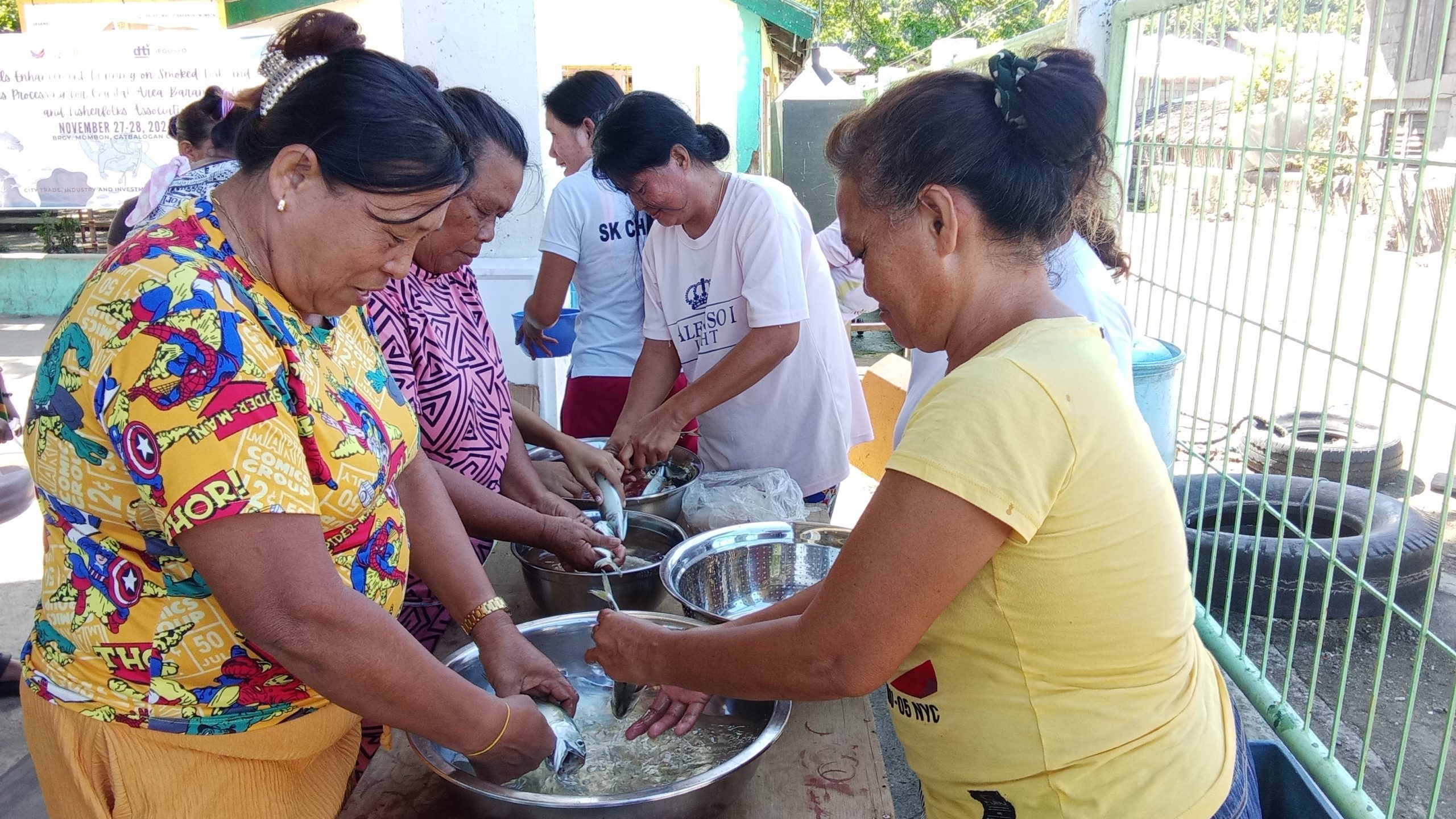
PILCD adopted a Sustainable Livelihood Framework in guiding the intervention. This involved a series of community consultations, resource mapping activities, and skills assessments to identify abundant local resources and existing competencies among the women. Through this participatory process, fish processing and smoking emerged as viable livelihood options – both culturally relevant and economically feasible.
The introduction of these new livelihood interventions, however, was not immediately easy for the group to absorb. Many members had limited prior exposure to formal enterprise development and were initially hesitant to take on new roles and responsibilities.
To address this, PILCD facilitated a series of hands-on and technical capacity-building activities. These included training on food safety and sanitation, Good Manufacturing Practices (GMP), practical fish processing workshops, product packaging and labeling, as well as costing and pricing sessions to help the women assess profitability and manage their enterprise more effectively.
The response to these trainings was overwhelmingly positive. The women became highly participative and motivated, demonstrating strong interest in learning new techniques and improving their skills. Beyond technical capacity, the trainings also strengthened group cohesion and confidence – especially after the association had previously experienced internal challenges and conflicts.
“Compared before, we are now more united, and goal oriented as a group. As the president of the association, I can see in my members their willingness and eagerness to engage and actively participate in the various activities provided for our organization.” – Ms. Jineth Ogan (President, Mombon Womens Organization)
Innovation in Action
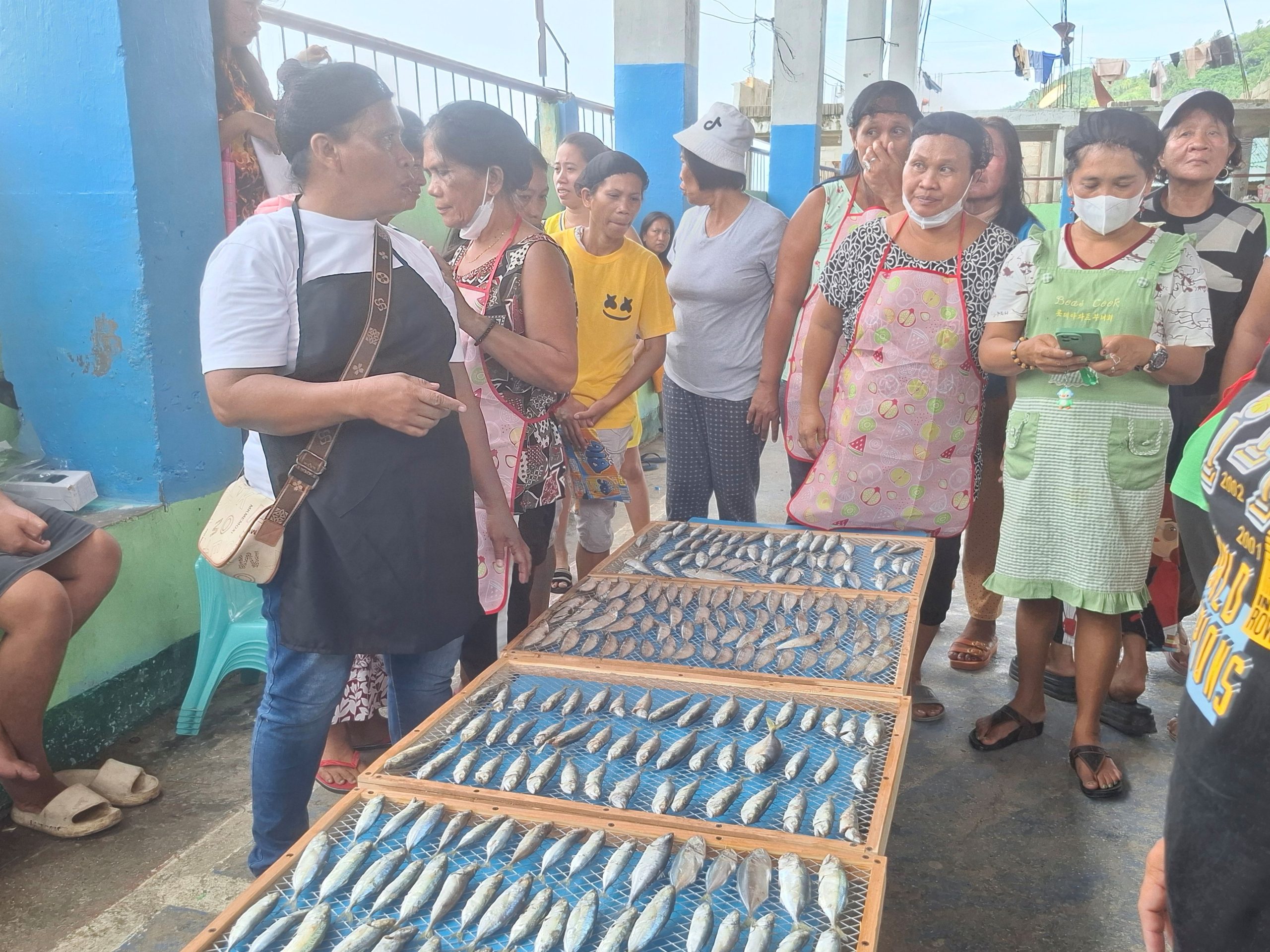
One of the key technologies introduced through the project was a fabricated cabinet-type offset fish smoker. Compared to traditional smoke huts and open stoves, the offset fish smoker separates the fire source from the smoking chamber. This design allows for better control of heat and smoke, resulting in safer working conditions, improved product quality, higher fuel efficiency, and a more environmentally sustainable fish smoking process.
Fish smoking became one of the core livelihood technologies promoted under the project. In collaboration with the Samar Provincial Office of the Department of Trade and Industry (DTI), the women’s organization also received skills enhancement training on other fish processing methods. These trainings covered Good Manufacturing Practices (GMP), costing, packaging, and basic product branding.
To support sustainability, counterparting mechanisms were explored with barangay local government units, particularly through Gender and Development (GAD) funds. Government agencies such as DTI and LGU Negosyo Centers committed technical assistance, product development guidance, and packaging support. DTI further facilitated the participation of the women’s group in local trade fairs, providing them with opportunities to showcase and test their products in wider markets.
Economic and Social Impact
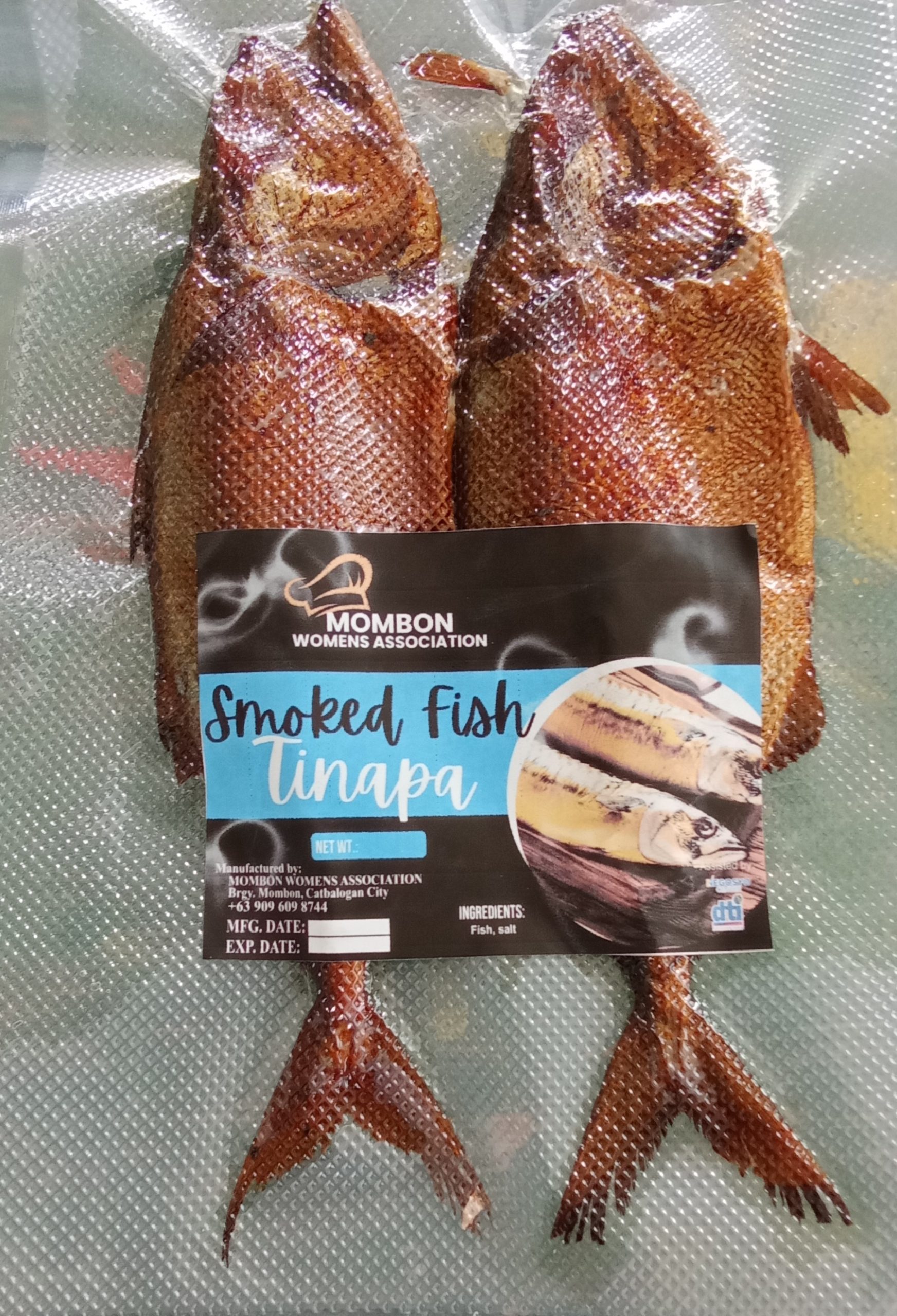
The livelihood initiatives provided women with alternative sources of income, enabling them – even in small but meaningful ways – to contribute financially to their households. Applying their learnings from the series of trainings, the group began selling smoked fish in selected municipalities in Samar, particularly in Pagsanghan and San Jorge, primarily on a wholesale basis.
“Actually, we can really see the potential of our smoked fish, especially since we sell it at a very fair price. Some of our customers are even waiting for us to sell again. However, due to the unavailability of raw fish in the community lately, the association is currently experiencing limited production.” – Ms. Jineth Ogan (President, Mombon Womens Organization)
Beyond income generation, the initiative created significant social impact. The process fostered leadership, confidence, and a stronger collective identity among the women, empowering them to actively participate in decision-making within their organization. Through hands-on livelihood training and shared responsibility in enterprise development, the women collectively decided to pursue small-scale production, reinforcing their sense of ownership and accountability.
As a result, the Mombon Women’s Organization has developed not only practical skills in fish processing and smoking, but also a deeper sense of empowerment- positioning them as active economic actors and leaders in their community’s journey toward sustainable livelihoods.
