
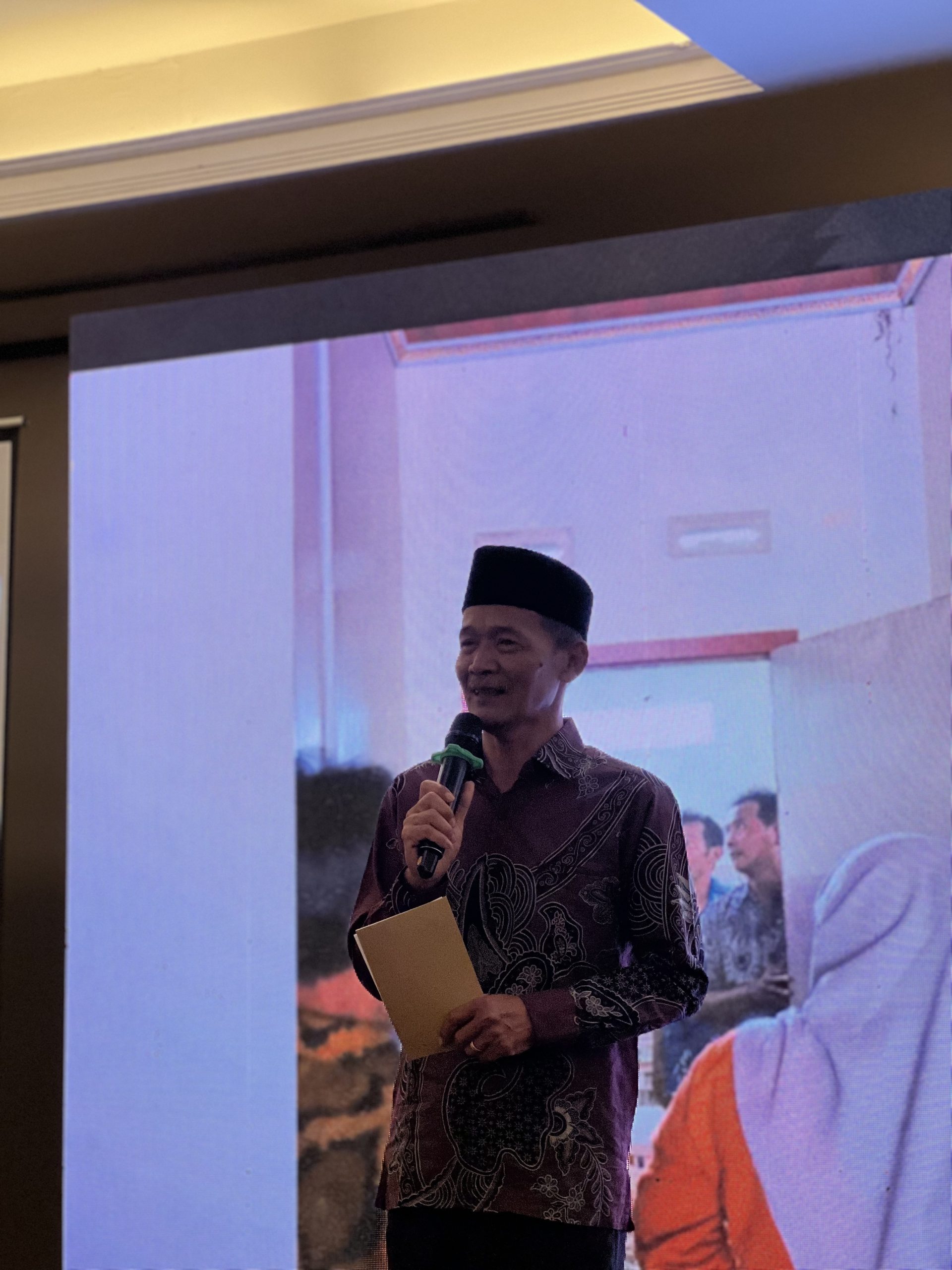
On 5 October 2026, ASB S-SEA held the Seger Waras Programme Dissemination Workshop. Four people from the programme villages shared stories from their communities in a TED Talk format. One of them was Suharyanta, the Lurah (village head) of Ngalang in Gunungkidul, who spoke about how involving persons with disabilities changed the way he runs the village government, and the responsibilities that come with it.
Before becoming village head, Suharyanta drove a water tanker truck. He delivered water aid to hamlets in Ngalang that sit at the top of steep slopes. A full 5,000-litre tank was too heavy to make the climb. But with less water in it, the load would slosh around and make the truck hard to control.
Suharyanta used this story to illustrate a long-standing problem in Ngalang: access to clean water. Over three years with the Seger Waras Programme, he has seen many changes, from clean water and disaster preparedness to the way he views residents with disabilities. Here are five lessons from Ngalang that Suharyanta shared.
1. Leaders also need to learn, and be willing to admit what they don’t know
Suharyanta openly admitted that at the start of the programme, he did not yet understand ASB’s aims and purpose. That understanding grew over time.
“Thank you to ASB for opening my eyes, opening my mind, and broadening my knowledge and understanding of how I run the government of Ngalang.”
Change in a village often begins with its leader’s willingness to learn something new.
2. Involve people actively
With support from the district-level disability forum, Ngalang set up a village disability forum called Difa Ngalang Sejahtera. For the past two years, its members have been involved in every activity.
“I invite our fellow residents who are most at risk, including persons with disabilities, to think with me about how to manage this village so it can move forward. And the results have truly been remarkable.”
This involvement goes beyond attending meetings when invited; it is active participation. In Ngalang, the Drinking Water and Sanitation Management Group (KPSPAM) is even chaired by a person with disabilities, Pak Giyanto.
3. Inviting people means taking responsibility for access
Suharyanta recognised that inviting persons with disabilities to take part comes with consequences: the venue has to be accessible. The Ngalang village office is now accessible, and its toilet has been tested firsthand by Yaqub, a wheelchair user from the Gunungkidul Disaster Response Disability Forum (FDTB).
“To invite our friends from Difa Ngalang Sejahtera, I also have to take responsibility for making the place accessible.”
4. Forming a disability organisation is not enough; it needs activities and a budget
Two weeks before the TED Talk-style session, Ngalang held its Development Planning Deliberation (Musrenbang). Residents themselves proposed two top priorities: addressing stunting and allocating a budget for disability group activities.
“Once there’s a decree, once the group exists, there must also be activities.”
One of the workshop participants, Pak Taufik from the Yogyakarta Special Region Provincial DRR Forum, echoed this point. Inclusion needs to be translated into governance: recognising residents with disabilities, inviting them to deliberations, creating space for affirmative measures, and allocating budget. In his view, what it takes is strong commitment from stakeholders to do these things.
5. A healthy environment is part of preparedness
Ngalang faces various disaster risks, including floods, landslides, drought, and forest fires. The village has now mapped its risks, set up assembly points, and identified residents in at-risk groups: persons with disabilities, young children, pregnant women, and older people. Flood simulations have been carried out, and the DRR Forum and Linmas (community protection unit) are on standby.
Waste management has also changed. Most of the land in Ngalang is community forest planted with teak. In the dry season, fallen leaves used to be burned on the spot, and the fire often spread into forest fires. Through Seger Waras, residents now turn those leaves into compost.
“This year, alhamdulillah, nobody in our area has cleared land by burning the forest.”
As for water, Suharyanta is confident its quality is now much better than three years ago, including in the hilltop hamlets that tankers once struggled to reach.
Keeping inclusion going
Seger Waras will soon come to an end. But for Suharyanta, a commitment to persons with disabilities must remain even when village leadership changes. The Ngalang village government has already taken steps towards this: a forum with legal standing through a decree, activities included in the budget, and a building that everyone can access. The hope is that once inclusion is institutionalised, it no longer depends on who holds office.
