
Extreme rain lasting more than two hours without a break is a danger sign for residents of Bometen Hamlet, Ngandong Village, Klaten District, Central Java. The hamlet is flanked by hills to the east and south and a large river to the north, and its land forms a basin. This combination means water and soil easily flow down into the settlement during heavy rain, a risk that has grown since the surrounding hills were excavated to build the Yogyakarta–Boyolali toll road.
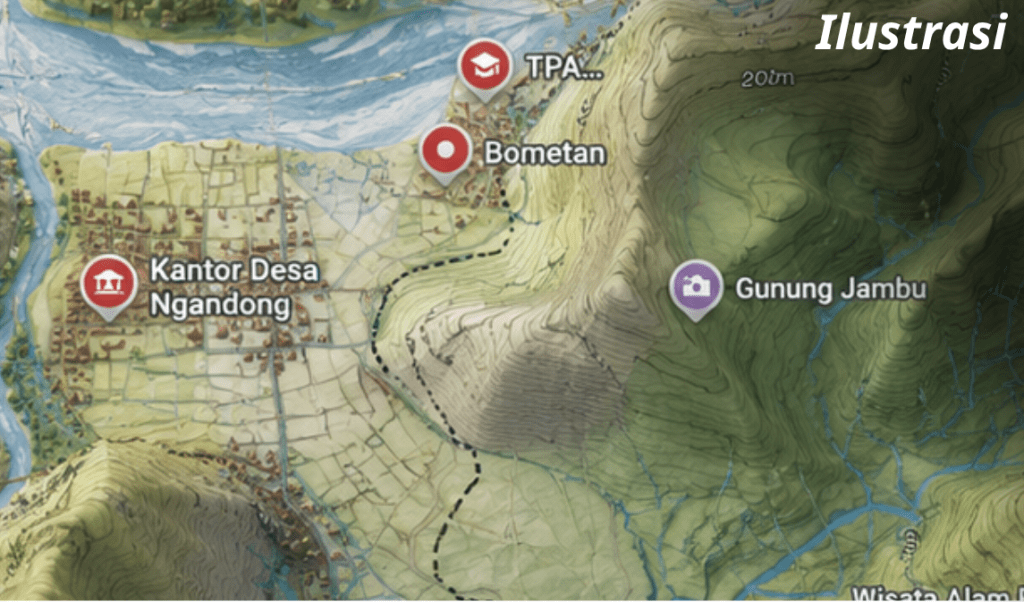
Illustration of the geography of Bometen Hamlet, Ngandong Village, Klaten District, Central Java.
Flooding is nothing new for Bometen residents. In past events, residents lost farmland, clean water sources were contaminated, and infectious diseases broke out at evacuation sites. Yet one thing had long been overlooked: there was no clear data on residents who need extra support during evacuation, including persons with disabilities and older people. As a result, these groups were often left behind in emergencies, not because they were ignored, but because the existing preparedness system had not been designed to recognise their needs.
The Spinal Cord Injury (SCI) Association of Klaten District saw this gap as a problem they needed to solve themselves, together with Bometen residents. SCI Klaten was itself born from the same painful experience it is now trying to prevent for others. After the earthquake that struck Yogyakarta and Central Java on 27 May 2006, 163 Klaten residents acquired new disabilities as a result, including 65 people with spinal cord injuries (SCI). At the time, there was almost no data recording the presence and needs of persons with disabilities affected by the disaster. From this experience, persons with disabilities who survived the earthquake, together with several volunteers, founded the SCI Association on 16 March 2009, and it became a legally registered organisation in December that same year. Since then, SCI Klaten has advocated for its members to receive proper health services, economic independence, and recognition and support from the government and the wider community.
ASB Support for Community-Led Initiatives
Over the past three years, Arbeiter-Samariter-Bund South and South-East Asia (ASB S-SEA) has run a small grant mechanism to support Organisations of Persons with Disabilities (OPDs) in designing and running disaster preparedness programmes suited to their own communities’ context and needs. For the period from late 2025 to early 2026, SCI Klaten was selected as a grant recipient.
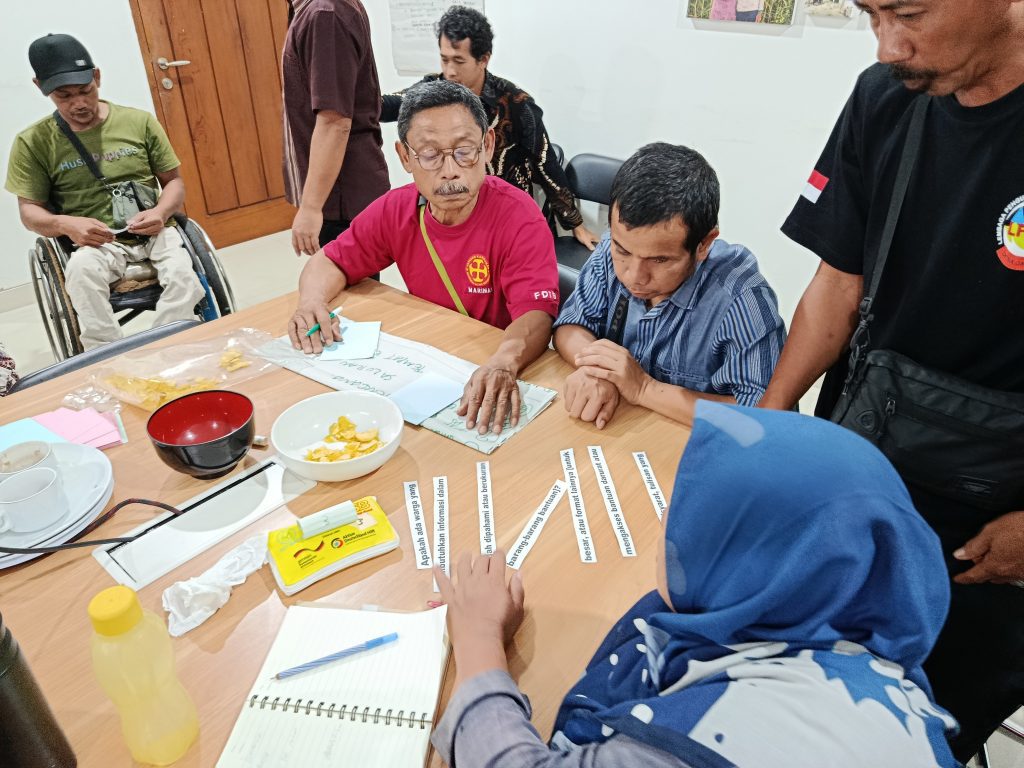
Early Warning Response Action workshop for Organisations of Persons with Disabilities at the ASB S-SEA office.
SCI Klaten’s involvement began with the Workshop on Anticipatory Action and Inclusive Humanitarian Response facilitated by ASB S-SEA in Yogyakarta in October 2025. In this training, SCI Klaten representatives learned the Anticipatory Action framework, an approach that mobilises support before a disaster actually happens, based on early warning thresholds agreed with the community. They also learned the principles of dignity and protection from the Sphere standards and the Humanitarian Inclusion Standards (HIS).
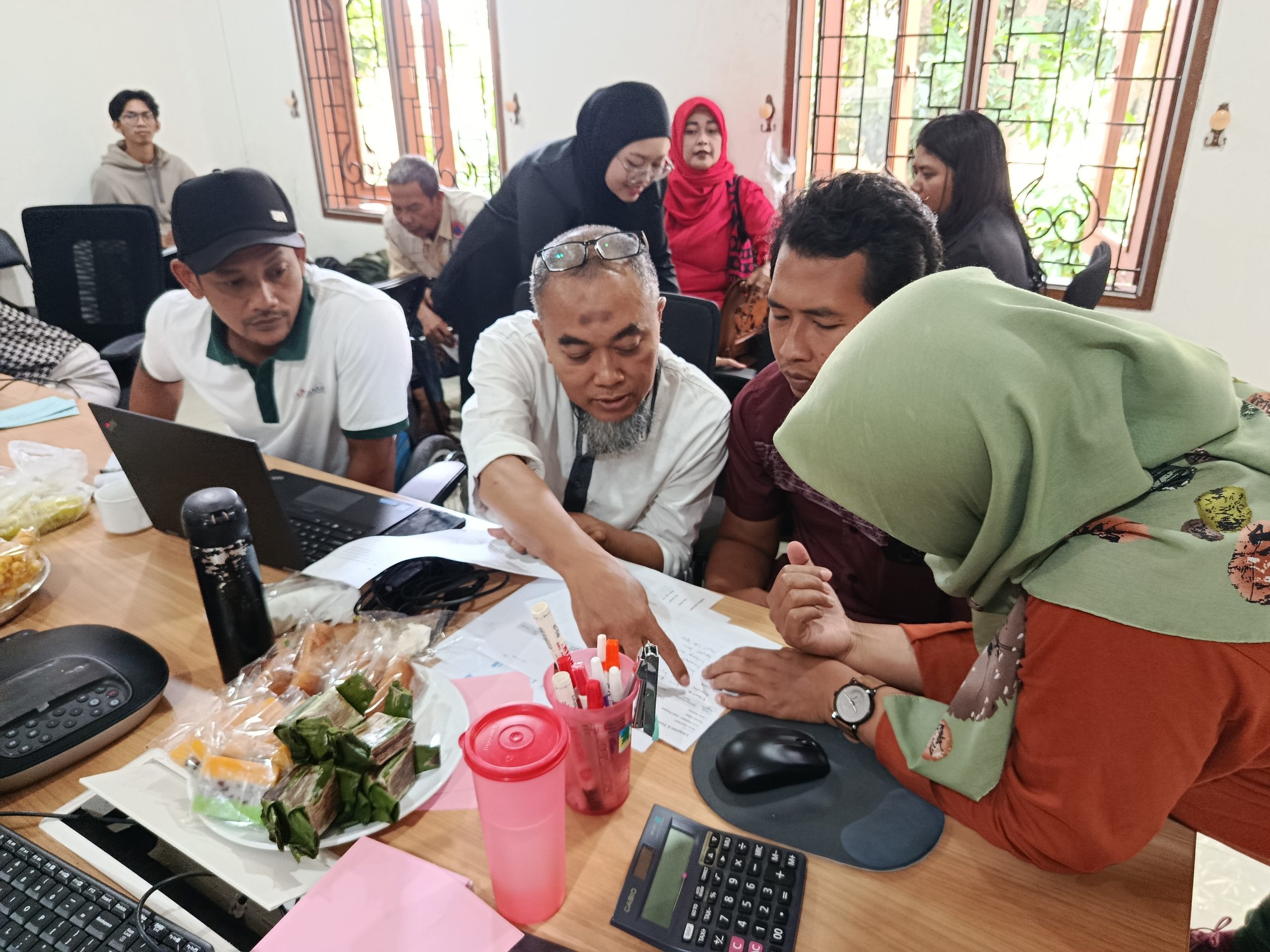
Through this workshop, ASB S-SEA also provided mentoring on inclusive budget management. SCI Klaten developed a proposal titled “Preparing Inclusive Emergency Stock for Anticipatory Action on Floods and Landslides.” The proposal was grounded in SCI Klaten’s local knowledge of conditions in Bometen, and was awarded grant funding from ASB S-SEA for December 2025 to February 2026.
Shifting the Data Paradigm: Focusing on Functional Limitations
One of SCI Klaten’s first steps was to improve how residents are counted. Until now, disaster assessments have often simply asked, “Do you have a disability?” This question leaves many people with functional limitations uncounted, because they don’t identify with that label or choose not to answer.
Using the Humanitarian Disability Needs Estimation and Screening Tool (HD-NEST) and the Washington Group Questions (WGQ), the SCI Klaten team, co-led by Samiyanto and Suripto, two wheelchair users, changed this approach. Instead of asking about disability status, they asked about the real difficulties residents face in daily life: difficulty seeing, hearing, walking, remembering, caring for themselves, or communicating.
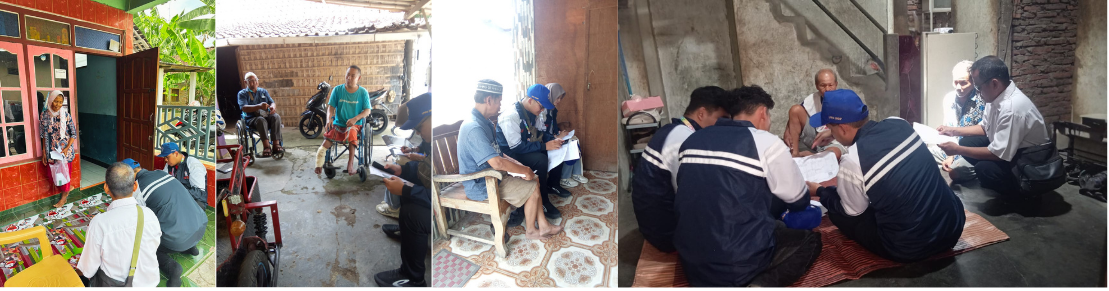
This approach paid off. Of the 61 residents surveyed in Bometen between December 2025 and February 2026, 17 were identified as having functional limitations. Of these, only 8 had previously recognised and described themselves as persons with disabilities. The other nine were only identified now, because they had previously been unfamiliar with or avoided the disability label.
Setting Triggers and Priority Groups
The mapping showed that 14 families in Bometen fall into the high disaster risk category. When SCI Klaten invited residents to develop mitigation strategies, the result was striking: residents named knowledge and skills to save themselves as their top need, ahead of the wish to receive relief items quickly. This choice reflects the principle of community resilience in disaster management: residents with knowledge and skills are better prepared to face disasters than those who rely only on outside assistance.
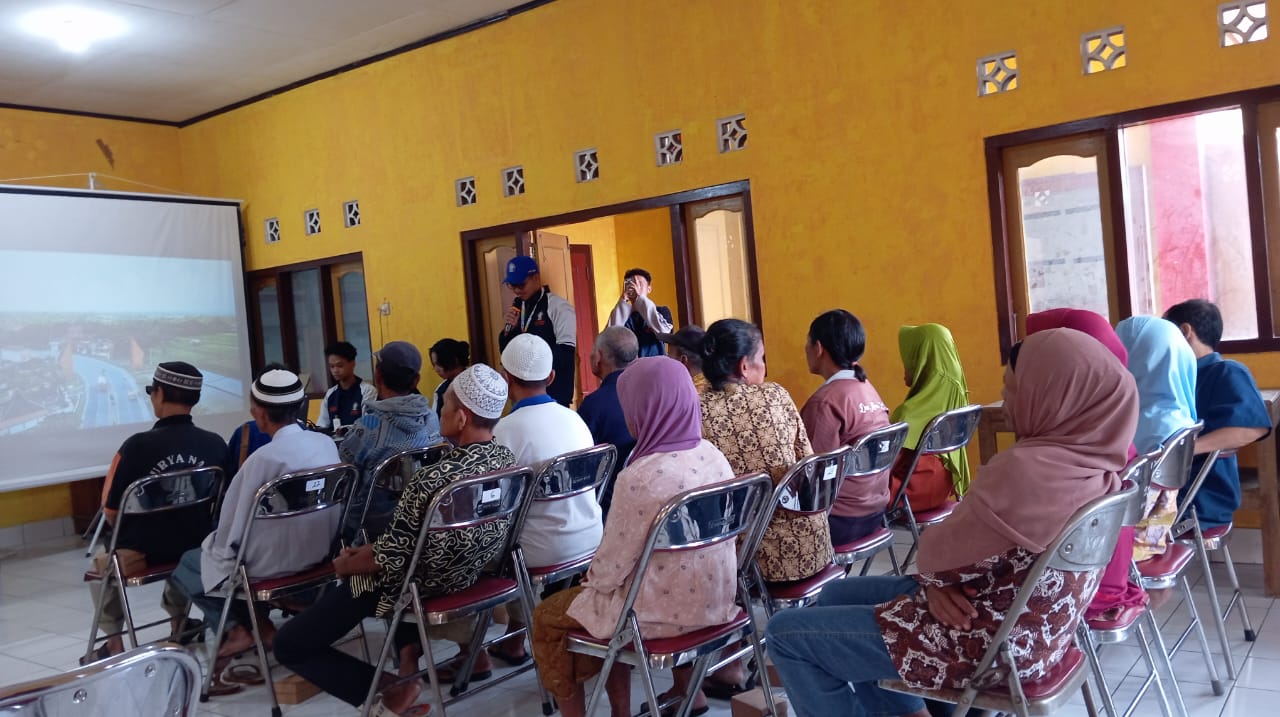
These priorities were then brought to a community dialogue on 15 January 2026 at the Ngandong Village Hall, attended by the Klaten District Disaster Management Agency (BPBD) and its Disability Service Unit for Disaster Management (ULD PB), together with residents, village officials, and persons with disabilities and older people. In this forum, residents and village officials agreed on a trigger indicator: emergency supplies will be distributed as soon as water starts entering residents’ homes, with persons with disabilities and older people receiving first access once the protocol is activated.
Supplies Prepared and Managed by the Community Itself
With this agreement in place, SCI Klaten managed the grant funds independently to prepare 20 hygiene kits and 20 shelter kits, each containing a folding mattress, mat, blanket, pillow, bolster, and emergency lamp. Each kit was packed, labelled, and stored centrally at the Ngandong Village Hall so it can be accessed quickly once the agreed trigger is met.
On 7 February 2026, SCI Klaten held a Focus Group Discussion (FGD) in the Ngandong Village Hall to review this joint work. The forum was attended by the Head of Ngandong Village, village officials, Karang Taruna (the village youth organisation), village volunteers, Universitas Diponegoro students on their community service programme (KKN), and the ULD PB of BPBD Klaten, underlining that this preparedness effort is not SCI Klaten’s work alone, but the result of collaboration among many actors at the village level.
Disability Data to Inform Future Village Development Planning
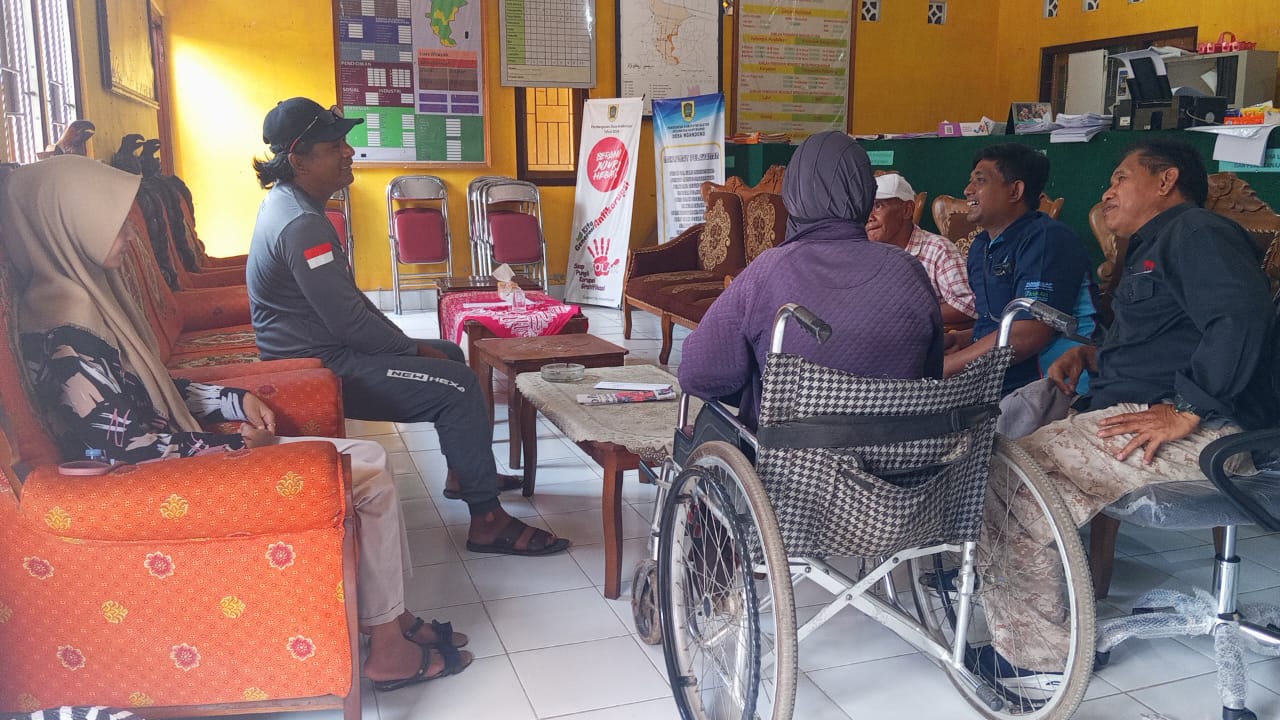
SCI Klaten coordinating with the Head of Ngandong Village. Credit: SCI Klaten.
Perhaps the most lasting result of this initiative isn’t the emergency stock, but the change in how Ngandong Village makes decisions. During the FGD, the Head of Ngandong Village, Kunto Widyatmoko, stated that the data from SCI Klaten’s assessment will be one of the references for the disaster management section of the Village Development Planning Deliberation (Musrenbangdes) in the years ahead. In other words, data collected by and for Bometen residents, including data on the needs of persons with disabilities and older people that had never been recorded before, will now help determine where the village’s disaster mitigation budget goes.
For residents, the impact is tangible. Ibu Sulastri, one of the prospective recipients from Bometen Hamlet, said:
“It helps us a lot that emergency supplies for evacuation are already available and prepared in case floods and landslides happen. This support gives our family more peace of mind, and hopefully no disaster will happen.”
Bapak Tugiman, another prospective recipient from Bometen, added his hope that this kind of support will continue:
“We hope support like this can continue to be provided, given the extreme weather we’re seeing now, in case floods and landslides happen. After a disaster, support will be very much needed, especially for the families hit hardest.”
Lessons from SCI Klaten
SCI Klaten’s experience offers important lessons for ASB S-SEA in supporting other OPDs in the future. First, the quality of disaster assessment and preparedness improves significantly when persons with disabilities are not only the people being counted, but also part of the team doing the counting, as Samiyanto and Suripto demonstrated in this programme. Second, collaboration with local volunteers and village officials, such as Krisnawan and Ikhsan Nugroho, has proven to strengthen the targeting and accessibility of assistance, while ensuring the initiative is embedded in village structures rather than standing alone as a temporary project.
SCI Klaten’s initiative shows what can happen when organisations of persons with disabilities are trusted and supported to lead disaster preparedness in their own communities. ASB S-SEA is grateful to be part of this journey and will continue to support other OPDs across South and South-East Asia to build truly inclusive community resilience, designed by residents, for residents.
(Author: Dhafin Izzanarsya Rhazdan Himawan)
