
How can resilience be achieved in coastal areas if participation is unequal, especially for at-risk groups, such as persons with disabilities?
Coastal communities are on the front line of climate change. Rising seas, stronger storms, and shifting fish stocks are reshaping how people in these areas live and work. As climate and ocean programs design solutions, including everyone in that process matters, especially groups who are too often left out. Persons with disabilities are active members of coastal communities, as fishers, traders, caregivers, entrepreneurs, and leaders, yet they are often under-recognised in policy design, data systems, and program implementation. Without deliberate inclusion, climate and coastal programs risk repeating the same gaps: persons with disabilities left out of early warning systems, excluded from training opportunities, or unable to access the infrastructure meant to protect everyone.
These are among the questions guiding the Climate and Ocean Adaptation and Sustainable Transition (COAST) initiative. COAST is a five-year program supported by the UK Foreign, Commonwealth and Development Office (FCDO) and led by DAI Global. Working in Indonesia, the Philippines, Viet Nam, and Mozambique, COAST supports coastal communities to adapt to climate change and build fairer, more sustainable fisheries. For COAST, building resilient and prosperous coastal communities means recognising that resilience cannot be equal if participation is not. Disability inclusion is therefore not treated as an add-on, but as a necessary condition for equitable and sustainable climate action, and COAST has committed to strengthening disability inclusion as part of its Gender Equality, Disability and Social Inclusion (GEDSI) approach. To turn this commitment into action, COAST wants to understand specific areas, such as how disability rights are reflected in coastal policy, how meaningfully persons with disabilities are involved in decisions about coastal resources, and how visible they are in the data that shapes these programs.
To carry out this work, COAST commissioned Arbeiter-Samariter-Bund South and South-East Asia (ASB S-SEA), an organisation with decades of experience embedding disability inclusion into humanitarian and development programs. ASB S-SEA was tasked with conducting a structured Disability Inclusion Scan across the four COAST priority countries, to assess how persons with disabilities are currently included, or left out, of coastal and climate programs, and turn the findings into practical recommendations COAST can act on, identifying what is working well, what is missing, and what can be improved.
Listening to Lived Experiences Across Four Countries
Between December 2025 and January 2026, ASB conducted two main consultation streams: Focus Group Discussions (FGDs) and Key Informant Interviews (KIIs). A total of 40 participants took part in FGDs across Indonesia, the Philippines, Viet Nam, and Mozambique. These participants represented 36 OPDs and 4 disability-focused organisations, including those operating in COAST implementation areas. Among them were 37 persons with disabilities (22 women and 18 men), ensuring diverse representation across disability groups and gender.
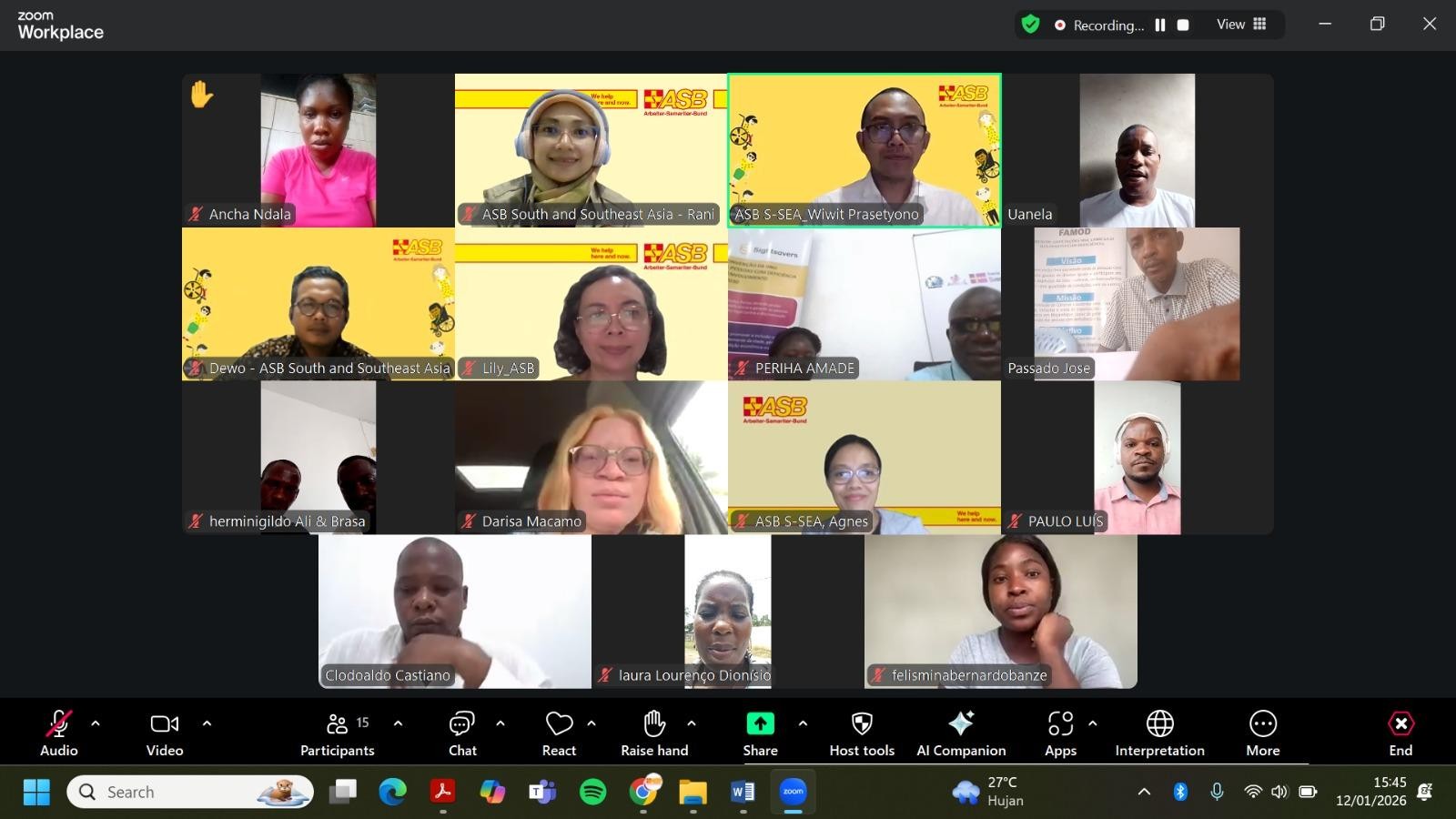
The FGDs explored five key dimensions:
- Inclusive policy and governance
- Participation and voice in decision-making
- Access to coastal and marine livelihoods
- Availability and use of disability-disaggregated data
- Capacity and partnerships of OPDs
These discussions provided rich insights into both structural barriers and practical opportunities for strengthening disability inclusion in coastal programming. The FGDs were made possible through close collaboration with three Organisations of Persons with Disabilities (OPDs):
- Life Haven in the Philippines
- Hanoi Independent Living Center and Inclusive Solution in Viet Nam
- Forum of Mozambican Associations of Persons with Disabilities (FAMOD) in Mozambique
These OPDs served as co-organisers throughout the consultation process. Drawing on their networks within national disability movements, they identified and reached out to OPD members and persons with disabilities to take part as participants, ensuring the consultations reflected genuine diversity across disability types and gender.

During the FGDs themselves, OPD representatives worked alongside the ASB research team to translate and rephrase questions where needed, helping ensure that participants, including those with intellectual, psychosocial, or sensory disabilities, could fully understand and engage with the discussion.
They also arranged sign-language and spoken-language interpretation, coordinated carer support for participants who needed it, and managed accessibility arrangements for both online and hybrid sessions. This combination of national disability networks and hands-on experience organising inclusive consultations was essential in creating safe, accessible, and meaningful spaces for OPD representatives to participate fully.
In addition to FGDs, 33 Key Informant Interviews were conducted with stakeholders across sectors. Informants included representatives from:
- 5 government institutions
- 23 NGOs and CSOs
- 2 research institutions
- 3 independent experts and academics
These interviews brought perspectives from climate change adaptation, disaster risk management, fisheries and aquaculture, marine conservation, livelihoods development, GEDSI, safeguarding, and coastal policy research.
From Listening to Action
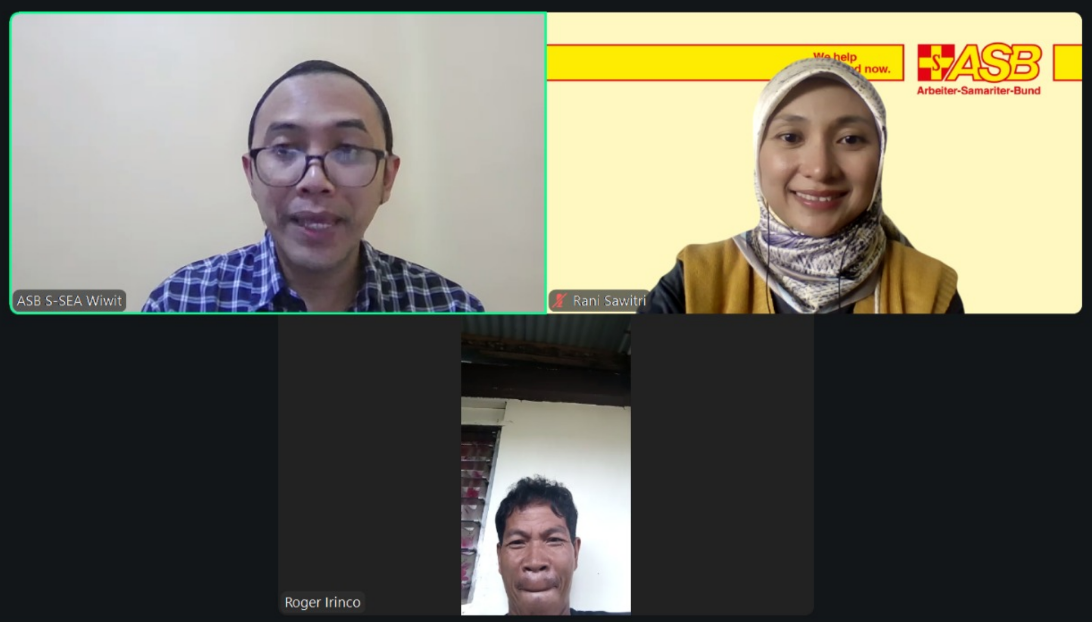
The consultations across the four countries surfaced an important insight that now anchors COAST’s country reports and cross-country synthesis: the barriers faced by persons with disabilities in coastal communities vary widely from one context to another, reinforcing the need for affirmative action and for OPD partnerships to be built into program design from the start, rather than added on afterward.
Equally telling were the stories that emerged along the way, of persons with disabilities working as fishers without being defined by their disability, and finding their own ways to participate in coastal livelihoods despite environmental barriers that were never designed with them in mind.
These findings affirm what guided the study from the outset: that meaningful inclusion starts with listening directly to persons with disabilities themselves, and the practical recommendations now in COAST’s hands offer a clear path for acting on what was shared.
Let’s Talk About Your Programming
This scan is one example of how ASB S-SEA partners with organisations to turn disability inclusion commitments into practical, evidence-based action, drawing on our experience co-developing inclusive frameworks, working hand-in-hand with OPDs across the region, and producing recommendations that organisations can actually act on. If your organisation is looking to strengthen disability inclusion in its own programming, whether through a similar scan, a co-designed framework, or hands-on technical support, we would be glad to explore how we can work together. Reach out to ASB S-SEA to start the conversation.
