
In the ECT WASH program, menstrual health is not treated as a stand-alone activity but as a core component of Gender Equality, Disability, and Social Inclusion (GEDSI). Across Indonesia, the, Bangladesh and Myanmar, the project integrates menstrual health (MH) into school WASH improvements and community engagement processes, combining infrastructure, education, social norm change, and economic empowerment.
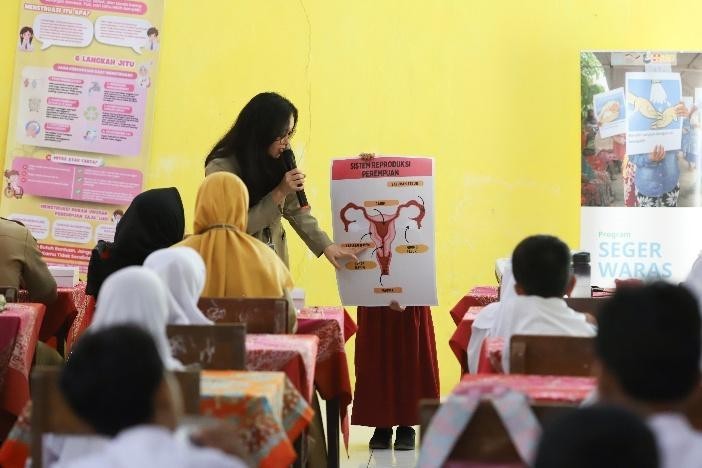
In most countries, schools constructed or rehabilitated MH-friendly toilets that ensure privacy, water access, and safe disposal facilities. These improvements were paired with menstrual health education for both girls and boys, reinforcing that menstruation is a shared social responsibility, and not a “women’s issue.” The dual approach of hardware and behavior change, helped reduce stigma, improve attendance, and foster more supportive school environments.
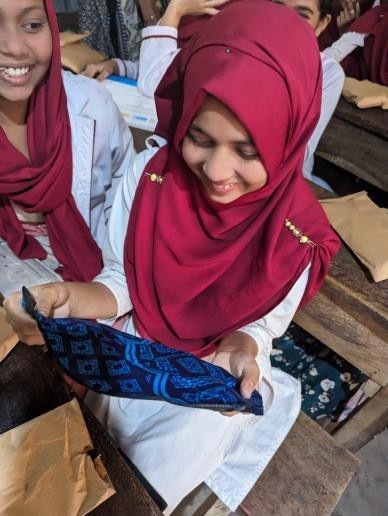
Specifically, the project in Bangladesh illustrates how MH can move beyond awareness toward sustainable inclusion and local ownership. Women—with and without disabilities—received training on safe and improved menstrual hygiene management, combined with entrepreneurship skills to produce and sell reusable menstrual pads. By intentionally including women with disabilities, the program shifted them from beneficiaries to economic actors within the local MH value chain.
The initiative reached more than 500 women and girls in the education session and menstrual pads distribution, addressing immediate affordability barriers. Trained women entrepreneurs subsequently began selling reusable menstrual products within their communities, extending the impact beyond direct project support. This model demonstrates a strong GEDSI-aligned practice: linking dignity and health education with women’s economic participation, thereby strengthening sustainability.
A cross-country learning point emerged around social norms and safe participation. In Bangladesh, women participants expressed discomfort discussing menstruation in mixed-gender courtyard sessions, particularly when male participants were present. Rather than viewing this as resistance, facilitators adapted. They created women-only safe spaces for sensitive discussions, used smaller group formats, and gradually introduced mixed dialogues over time. This culturally adaptive facilitation ensured that inclusion efforts did not unintentionally silence women’s voices.
Another innovation in communication methods to strengthen impact is further foreseen. In Myanmar, menstrual health education was delivered via interactive puppet shows for girls and boys. This creative approach made sessions engaging, age-appropriate, and easier to understand, helping to break taboos in a culturally sensitive way. By using storytelling and humor, facilitators ensured that key health messages were retained while reducing embarrassment around the topic. The puppet shows also created a shared learning experience, reinforcing that menstruation education can be informative without being intimidating.
What makes this approach a best practice is its systems-based integration of infrastructure, education, leadership, and social norm change within menstrual health programming. Under ECT WASH, menstrual health–friendly facilities are not delivered as stand-alone outputs but are paired with age-appropriate and gender-inclusive education that equips both girls and boys with knowledge, confidence, and shared responsibility. The approach further strengthens sustainability by positioning women—including women with disabilities—not merely as beneficiaries but as leaders, facilitators, and entrepreneurs, linking menstrual health initiatives to livelihood pathways that enhance agency and economic resilience. At the same time, culturally adaptive communication strategies, such as creating safe spaces for dialogue, phased engagement with men and boys, and creative tools like puppet theater, ensure that sensitive topics are understood, accepted, and embedded within community norms. By combining service provision with empowerment, inclusion, and norm transformation, the model demonstrates that menstrual health becomes not only a WASH output, but a catalyst for gender equality and inclusive community resilience.
