All Programs

Strengthening the Resilience of Disaster-prone Communities in South Lampung by Integrating Socio-economic Risk Mitigation Measures into Local Development Programs and Mechanisms

To strengthen the resilience of disaster-prone communities in South Lampung District, focusing on disproportionately at-risk populations.

Overview Project

BUDGET

500.000,- Euro

DURATION

1 December 2021 – 30 November 2024

DONOR

Federal Ministry for Economic Cooperation and Development (BMZ) and ASB

LOCATIONS

LampungLampung Selatan district, 2 villages in Rajabasa sub-district (Kunjir and Sukaraja village) 1 village in Sidomulyo sub-district (Suak village)

Objective

To strengthen the resilience of disaster-prone communities in South Lampung District, focusing on disproportionately at-risk populations.

Result / Programme Outcome

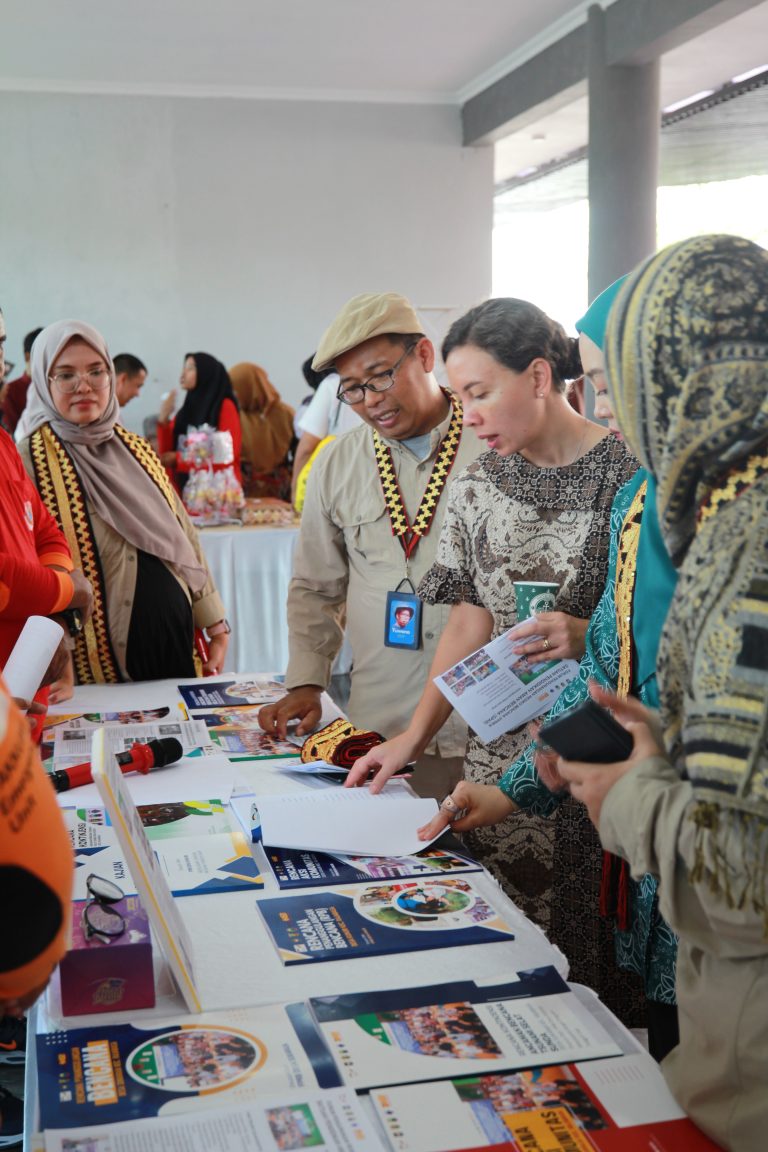
As community-owned social enterprises, Badan Usaha Milik Desa (Bumdes) work closely with local governments (3 villages and South Lampung District) and local businesses to support the creation of inclusive, sustainable, and risk-sensitive livelihoods.

Programme Output

  1. The population (especially women and persons with disabilities) in the three project communities have demonstrated their collective capacity and improved practices to identify, prepare for, and manage interrelated socioeconomic risks (especially disaster, health, and livelihood risks) and have taken adequate measures to manage these risks.
  2. Local governments in the project district and the three project communities have functioning multi-stakeholder mechanisms for risk-sensitive planning and implementation of synchronized socio-economic development programs. which take into account complex risks for sustainable development.
  3. Bumdes in the three villages are professionally managed and have competitive business units.
  4. Relevant stakeholders in community development have collaborative networks, guidelines and practical examples for inclusive and coherent implementation of the Desa Tangguh and Bumdes government programs.
  5. At the end of the project, the local partner organization Paluma will have improved knowledge and skills, especially in participatory MEAL, evidence-based programming, finance management and change management, which it will apply in its programs and pass on to governmental and civil society partners.

Key Activities

Key activities under result 1: 1.1 Capacity building for community members regarding how to conduct a participatory situational analysis 1.2 Collection of disaggregated data as well as capacity mapping of vulnerable populations 1.3 Building and strengthening community-based organizations such as DRR forums, disability organizations, and community-based business groups 1.4 Raising awareness and conducting simulation exercises by trained community volunteers (including women and people with disabilities).

Key activities under result 2: 2.1 Awareness raising and capacity development for community and district representatives regarding the integration of social inclusion, risk management and socio-economic development 2.2 Establish and strengthen a multistakeholder coordination mechanism (e.g., working group) at the district level. 2.3 Participatory development of inclusive and risk-sensitive community-level development plans. 2.4 Assist community members in developing community-level risk-sensitive planning. 2.5 Participatory development of DRR plans that also take into account the aspect of economic resilience.

Key activities under result 3: 3.1 Strengthen Bumdes management and assist in the development of risk-sensitive strategies to drive business development. 3.2 Capacity building for BUMDES management regarding development and management of alternative business entities (topics include social entrepreneurship, identification of local potential, adaptability, product innovation, marketing, branding, packaging, and licensing) 3.3 Capacity building and technical assistance to vulnerable groups (women and people with disabilities) in economic development and income generation opportunities led by Bumdes. 3.4 Strengthen Bumdes networking with relevant stakeholders (e.g., community-based business groups, government stakeholders, private sector, district-level Bumdes group, and national level).

Key activities under result 4: 4.1 Documentation, validation and dissemination of lessons learned at the local and national level. 4.2 Develop systematic modules on inclusive and risk-sensitive Bumdes management and community-based strategies to promote economic development. 4.3 Roll-out of training on inclusive and risk-sensitive Bumdes and community development planning for community representatives from outside the project communities. Results: As community-owned social enterprises, Badan Usaha Milik Desa (Bumdes) work closely with local governments (3 villages and South Lampung District) and local businesses to support the creation of inclusive, sustainable, and risk-sensitive livelihoods. Mitra: Perkumpulan Paluma Nusantara will lead the overall implementation of the Programme at national and local level.


Target Groups / Beneficiaries

Direct project participants:

  • Representatives of community-based organizations (esp. women's groups, disability organizations, business groups, community media teams) and other community members: 2,719 people (m: 1,343 f: 1,337, persons with disabilities: m: 15 f: 24)
  • School representatives (students, teachers, parent representatives): 743 people (m: 392 f: 345, persons with disabilities m: 3 f: 3)
  • Representatives of local authorities/administration including local disaster management authority (BPBD): 45 (m: 30 f: 15) no persons with disabilities
  • Management of Bumdes and the associated business units: 30 people (m: 24, f: 4, persons with disabilities m: 1, f: 1)
  • State actors (Provincial and district level): 39 people (m: 26, f:
  1. no persons with disabilities
  • Civil society actors at the national and sub-national levels, as well as government actors at the national level (including representatives from disaster management agency BNPB, universities, service providers, tourism sector, local and national NGOs, disaster risk reduction / DRR forums): 120 people (m: 54, f: 27, persons with disabilities: m: 31, f: 8)
  • Representatives of community and local civil society actors (e.g., women's groups, disability organizations, community-based CSOs) from 10 provinces in Sumatra: 75 people (m: 53, f: 22, no persons with disabilities). Total targeted direct project participants: 3,771 people (m: 1,922; w: 1763), including 50 men and 36 women with disabilities. Indirect project participants:1,038,274 (m: 531,794; w: 506,480) people. This is the entire population of Lampung Selatan District, excluding the direct project participants. The indirect project participants benefit in particular from the increased capacity of their communities and the district administration to develop and implement policies and programs to promote inclusive and risk-sensitive socioeconomic development.

Featured Story of Change

Related News & Stories