
When the finance team is busy ensuring every payment is made on time, the human resources team keeps operations running smoothly, and the programme team works tirelessly alongside communities on the ground, how can we be sure that every team is truly moving towards the same shared goal?
This is one of the questions ASB S-SEA continues to ask itself as an organisation that is always growing. We try to answer it by pausing, if only briefly, from our everyday routines, through the National Team Meeting, or NTM, our annual forum that brings all staff together in one room.
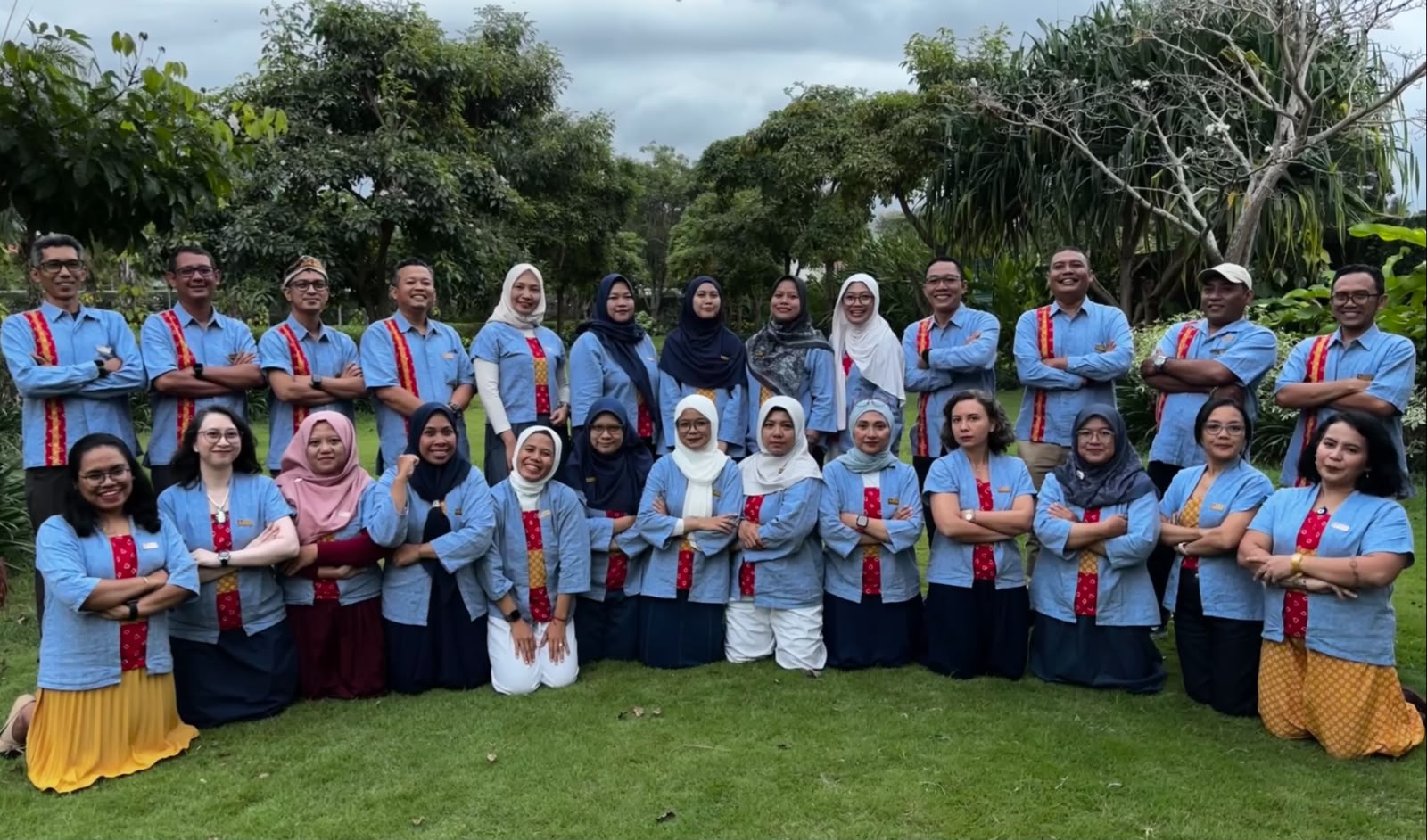
This year, from 9 to 14 August 2026, NTM was held in Banyuwangi under the theme Growing Impact, Shaping the Future. The moment felt particularly significant, coinciding with twenty years of ASB’s presence and work in Indonesia, one of ASB S-SEA’s programme countries in the region, and offering a space to celebrate shared achievements while recalibrating the organisation’s direction for the years ahead.
A Space for Mutual Understanding
One of the moments that marked this celebration of achievements was when each team discussed and presented what they wanted to start, what needed to stop, and what should continue. The finance team spoke about speeding up document verification and ensuring that every financial resource is used efficiently and on time, as well as plans to simplify approval thresholds so that work processes flow more smoothly. The HR and admin team shared updates on work scheduling and asset management, as well as small everyday habits such as sorting waste and keeping shared spaces clean. The partnership team spoke about the importance of a living, regularly updated partnership guideline, and of building a shared understanding of ASB S-SEA’s position in national-level advocacy. Meanwhile, the communications team outlined plans to strengthen its content strategy and better document the impact of completed programmes.
Sessions like these give programme staff a clearer picture of why administrative and financial processes require time and care, while operational staff gain a deeper understanding of the dynamics and challenges programme teams face on the ground. Of course, the short time available at NTM means this understanding cannot be built perfectly or completely within just a few days. Yet this is precisely where the value of NTM lies: a space that is nurtured every year so that empathy and understanding across functions at ASB S-SEA continue to grow.
Living Our Theory of Change
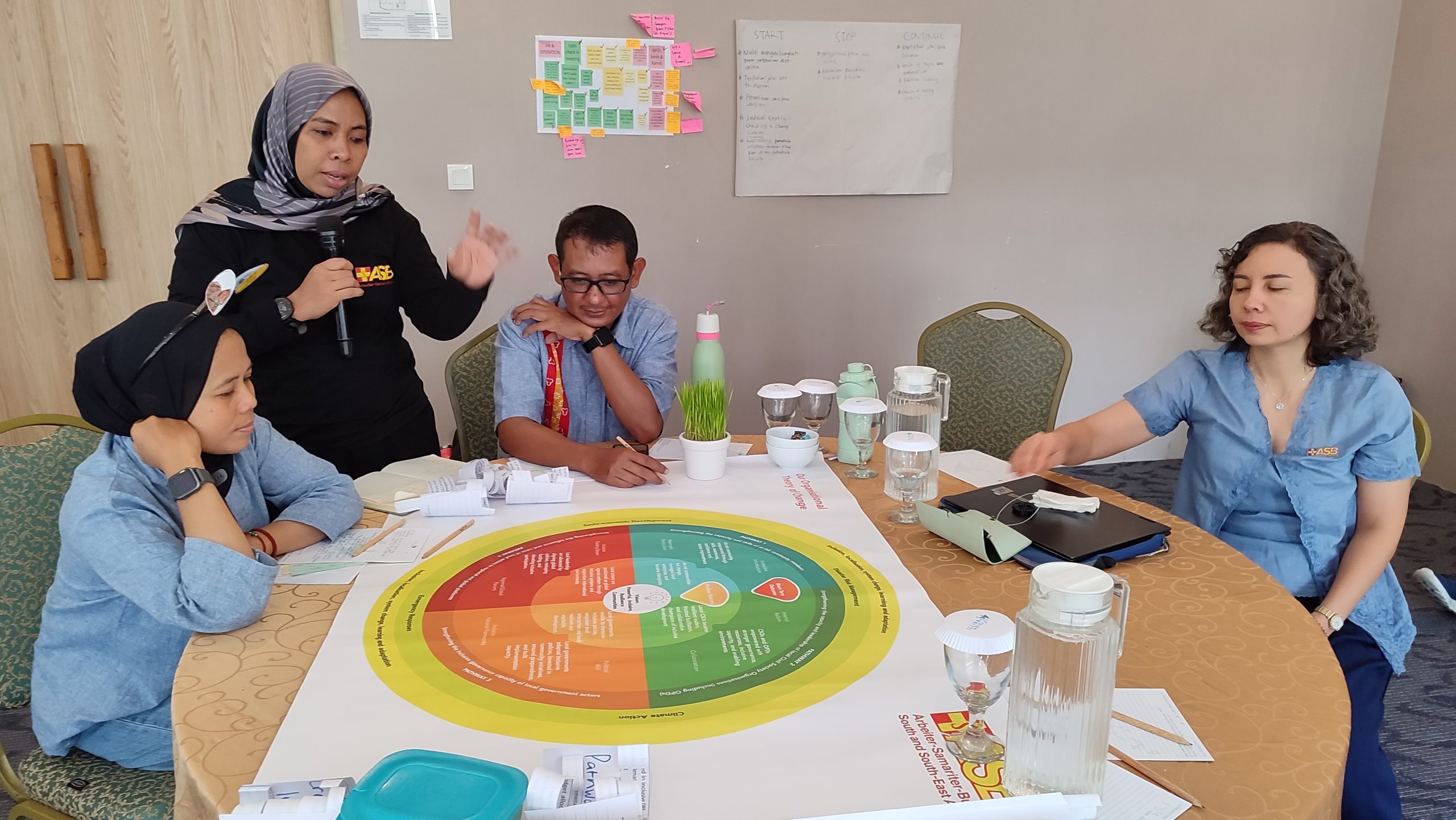
One of the more reflective parts of this year’s NTM was a session titled Living Our Theory of Change. ASB S-SEA did not previously have a formally articulated Theory of Change, or ToC. This framework was only developed in recent years, as part of an effort to align the organisation’s strategic objectives, and was introduced to the whole team for the first time at last year’s NTM. Since then, the ToC has become one of the frameworks guiding planning and shaping how teams interpret results on the ground.
This year, a year on from its introduction, we revisited what we understood about the framework and which parts still felt unclear. Several questions kept coming up, including how to measure a particular team’s contribution to a given pathway. Questions like these are, in fact, a sign that the process of internalising the ToC at ASB S-SEA is actively continuing, as one would expect of a framework that is still being tested and refined through real experience.
The discussion then moved further, examining concrete changes that had taken place over the past year as evidence of the ToC being applied beyond the meeting room. Examples shared included the involvement of persons with disabilities through Village Disability Groups, supported to the point of successfully advocating for village budget allocations, and efforts to help communities access clean water services as part of the first pathway. Several programmes were also presented as case studies in applying the ToC, including Harmoni, which promotes an inclusive green transition at village level; the joint programme with Sikola Mombine, working alongside persons with disabilities and women in vulnerable situations in Central Sulawesi; the joint programme with Jemari Sakato in Mentawai, strengthening inclusive, gender-responsive disaster risk reduction; and the water, sanitation and hygiene programme running across Indonesia, the Philippines and Bangladesh.
To help ensure that data and results from the ground are captured and told more effectively, the MEAL team also introduced the use of Airtable as a platform for consolidating ToC indicators from partners. The aim is for ASB S-SEA’s achievements to no longer be scattered across various files and individual memories, but instead brought together into a fuller organisational account, combining quantitative data with the real stories of change experienced by the communities we work with. The session closed with a commitment from each group to set targets for individual indicators and to plan how the ToC framework will be shared with partners and government counterparts, a small but important step towards keeping the ToC alive well beyond the page.
Revisiting Our Organisational Direction
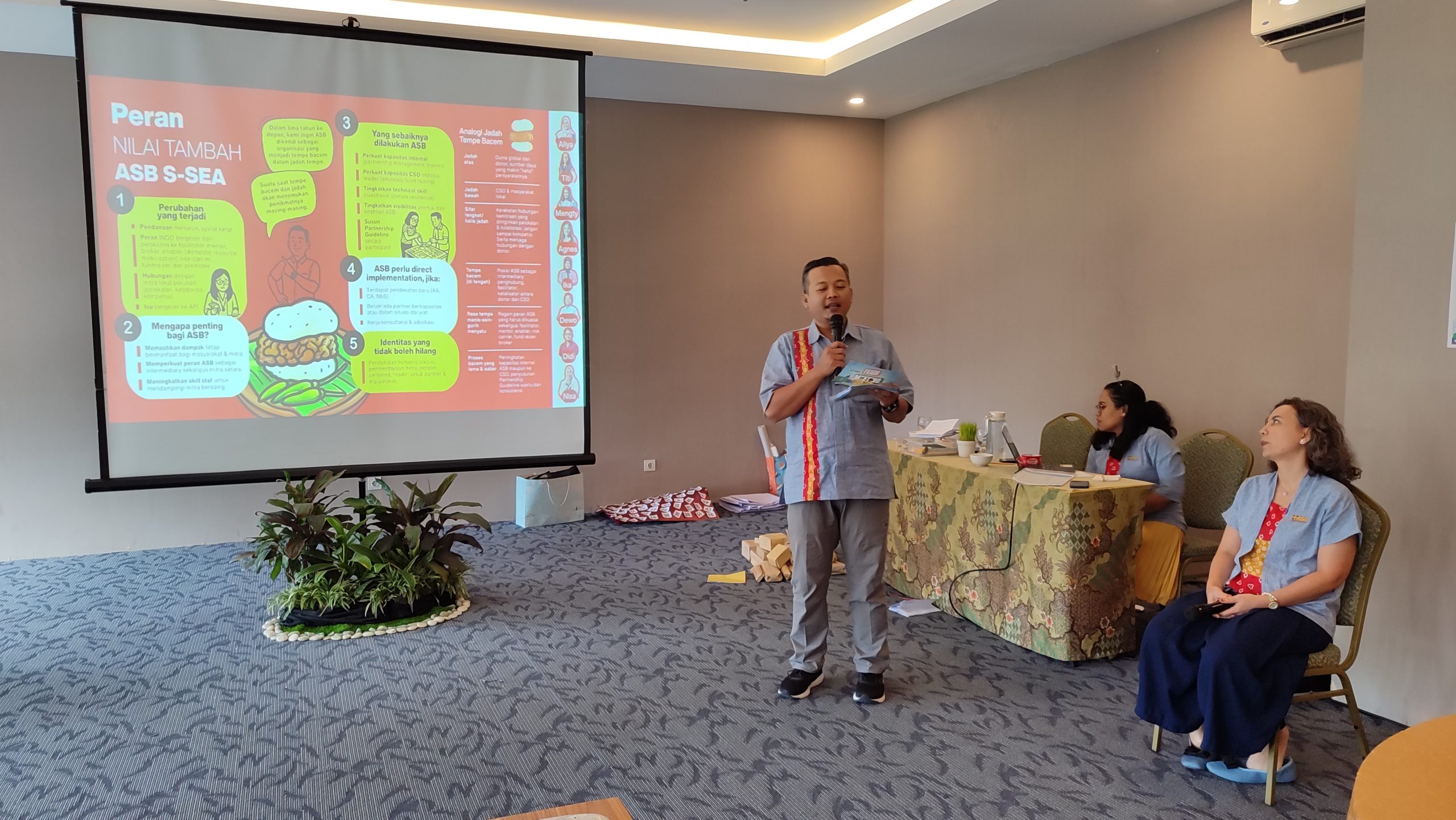
The organisational outlook session presented candid data on how ASB S-SEA has changed. Between 2020 and 2021, nine of the eleven projects we ran were still firmly rooted in ASB S-SEA’s established strengths in disaster risk reduction, humanitarian response and disability inclusion. By 2025 to 2026, the project portfolio had begun to take on a new shape, with climate action and green livelihoods programmes such as Harmoni and several other global programmes coming to the fore. A similar pattern emerged in the funding opportunities pursued over the past fifteen months, most of which had already moved into these newer areas of work.
Importantly, this shift is not understood as ASB S-SEA leaving its identity behind. Rather, its established strengths in humanitarian work and disability inclusion are being carried into new areas such as climate action, so that the two reinforce one another rather than replacing each other. Another change taking place is the growing share of ASB S-SEA’s work delivered together with local partners, rising from around 36 per cent in 2020 to 2021 to 63 per cent in 2025 to 2026.
This shift means that technical expertise alone is no longer sufficient. ASB S-SEA must keep developing other capabilities, such as assessing prospective partners’ readiness, building trust, supporting capacity strengthening, and maintaining quality and accountability in work carried out with partners. This session served as a reminder that being an organisation that keeps growing also means continuing to learn how to respond to change, without losing sight of the values we have long stood for.
Honouring Our Commitment to the Planet
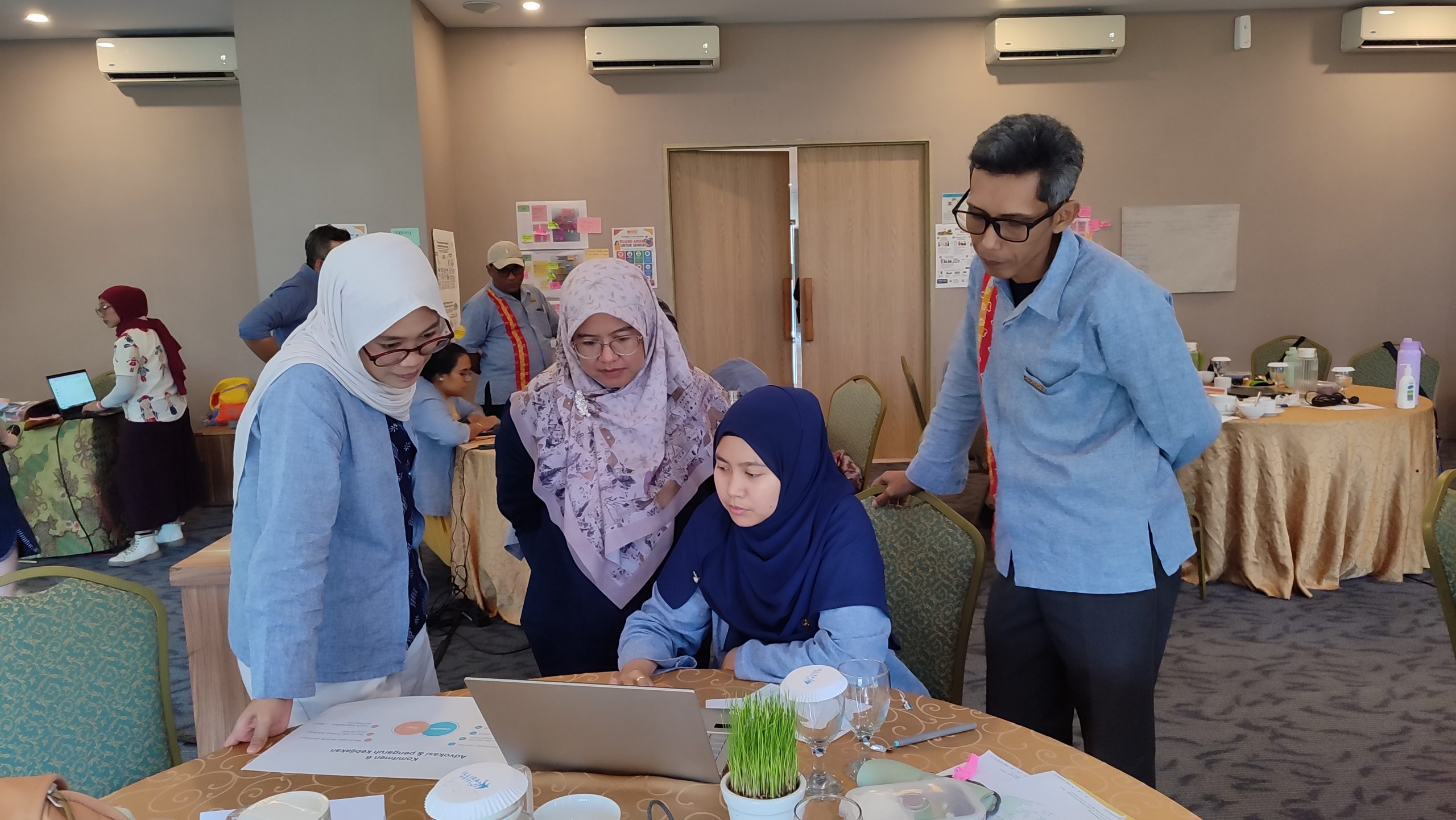
On 3 April 2024, ASB S-SEA formally signed the Climate and Environment Charter as a concrete commitment to addressing climate change. This commitment is reviewed every year, and NTM 2026 once again provided a space to assess how far it has been carried through, via the session From Commitment to Real Impact: Driving Climate Action, alongside an update on the Climate and Environment Charter itself. In this session, the team jointly reviewed the targets that had been set and began mapping out which areas of focus would be most realistic to pursue over the coming year. This step matters because it ensures our climate commitment does not remain a statement on paper, but is genuinely translated into measurable action, in step with strengthening ASB S-SEA’s profile on climate action, which is also one of the major aims of this year’s NTM.
Leadership Shaped by Habit
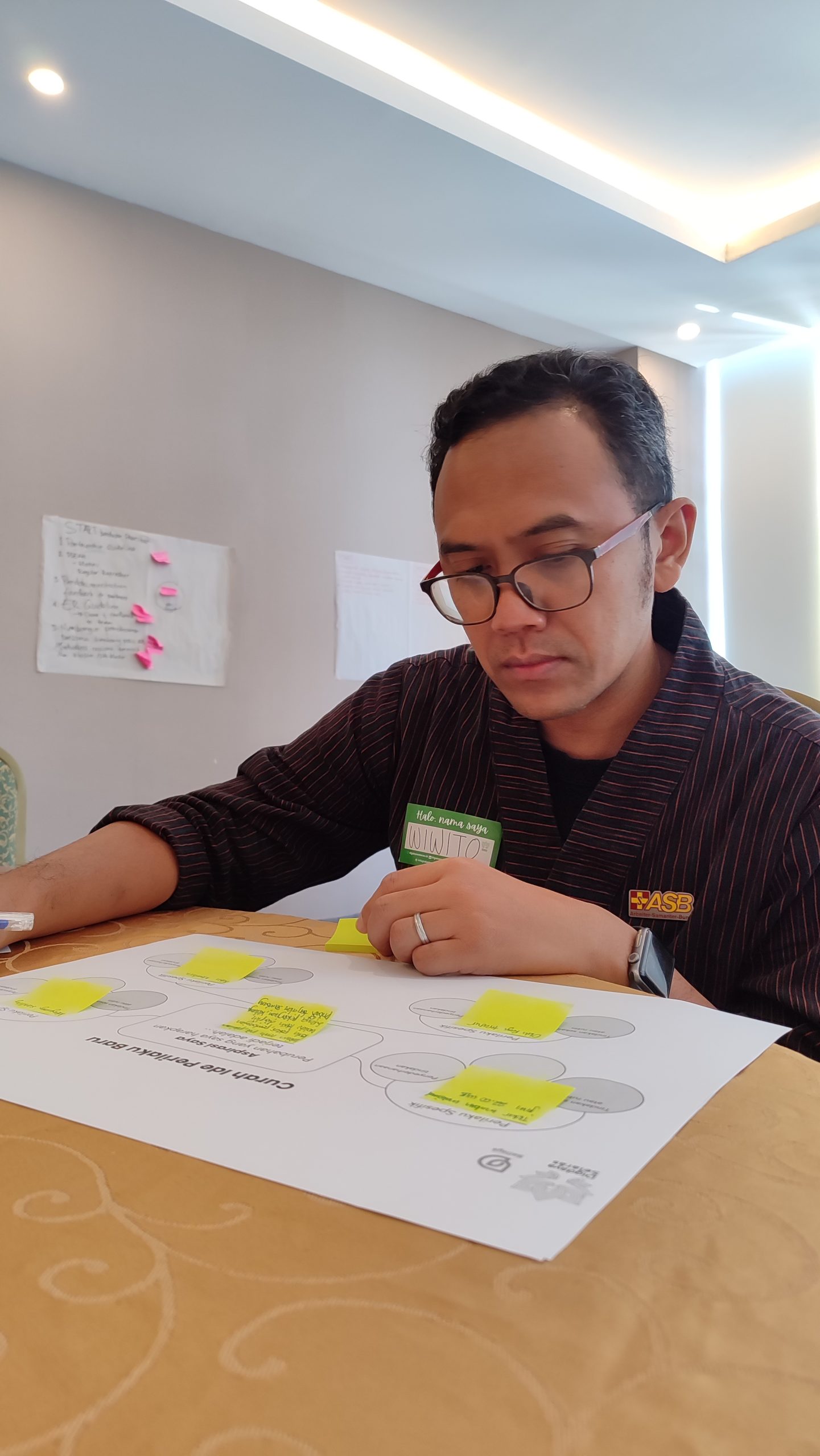
One of the most personal sessions at this year’s NTM was Leadership as Habit, facilitated by Sarilani Wirawan and Ade Yuliasi of Digdaya Selaras. It began with a simple but fundamental conviction: “Organisational culture is not shaped by slogans. It is shaped by behaviours that are repeated and tolerated.”
Building on this conviction, the session invited all staff to reflect on their own working habits. It opened with a mindfulness exercise to help everyone be fully present in the moment, before moving on to the Tiny Habits methodology, an approach that views behaviour as the product of motivation, ability and prompts working together.
Through a series of games and discussions, participants came to understand that leadership is not really about formal position, but about simple habits that anyone can practise, such as clarifying expectations from the outset, giving regular updates, honouring commitments made, raising concerns constructively, listening attentively, and being willing to take responsibility. It is these small habits that ultimately build trust, clarity and accountability, the foundations a team needs to work ever more cohesively, day by day.
Growing Together
NTM 2026 closed with a day of togetherness called Growing Together, in which all staff took part in outdoor activities in Papring Village, Kalipuro, and walked through the shade of the ancient Djawatan forest. Simple, yet full of meaning, it served as a reminder that nurturing team togetherness and caring for the environment truly go hand in hand.
After six days of working through this process together, NTM 2026 offered one important lesson: that ASB S-SEA remains an organisation that is still growing, with a learning process that is not always perfect. There is a ToC still being internalised, a climate commitment still being reviewed target by target, and new habits still being cultivated as part of everyday working life. Yet it is precisely through this honest, ongoing process that meaningful impact is created. Spaces like NTM are what keep every member of ASB S-SEA staff, from programmes to operations, from partnerships to management, moving in the same direction towards a shared goal: strengthening our impact and shaping a better future, in keeping with this year’s theme, Growing Impact, Shaping the Future.
