
YOGYAKARTA — Twenty years is no short stretch of time. For ASB (Arbeiter-Samariter-Bund) South and South-East Asia, two decades in Indonesia have been a journey full of meaning. It began with care amid the rubble, grew into a pioneering role in inclusive disaster risk reduction, and has now become a key organisation across South-East and South Asia.
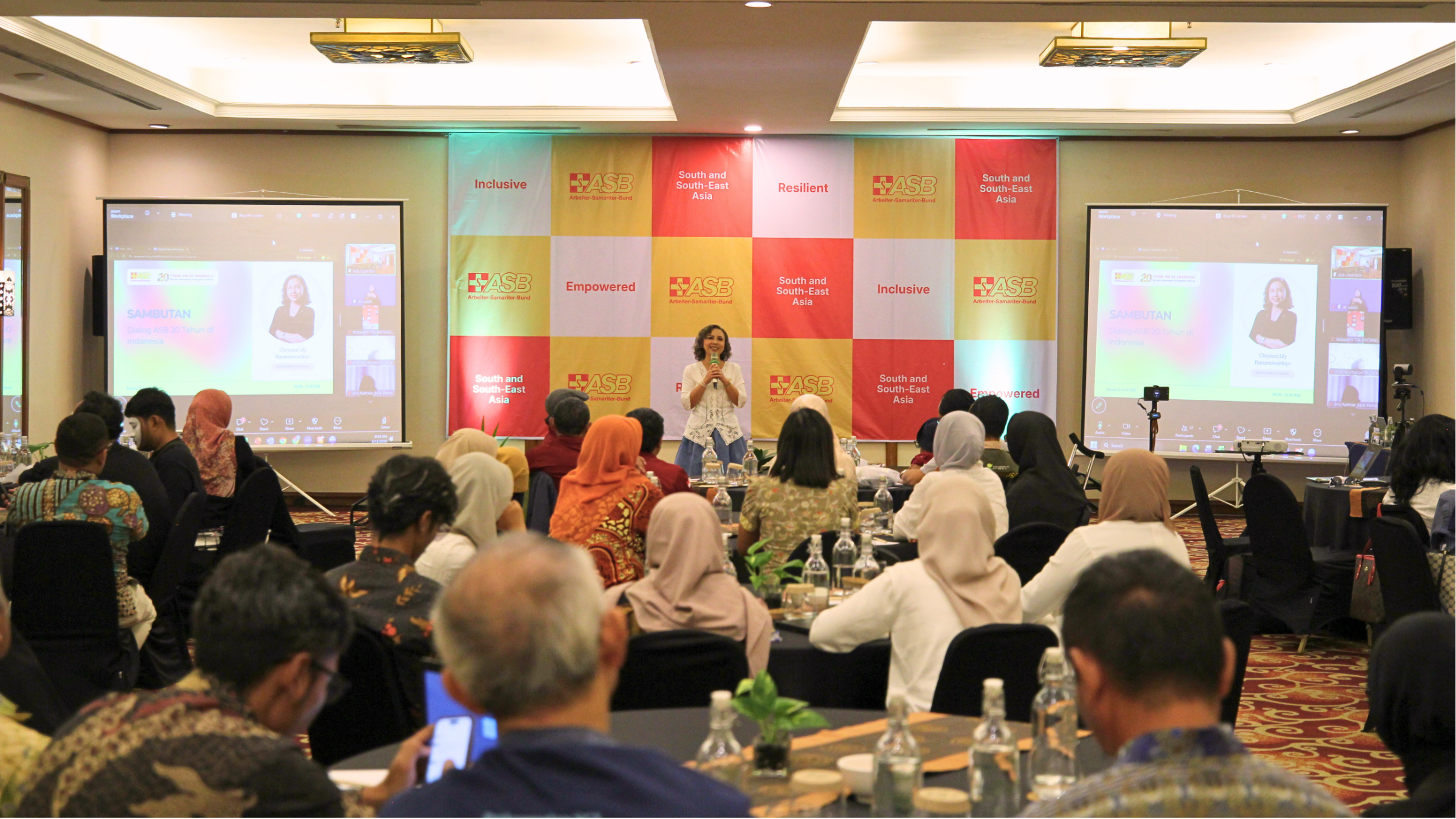
On 11 June 2026, ASB held the 20-Year Dialogue: Impact, Lessons, and Future Directions for Inclusion, themed “Building Inclusive Resilience Together,” at Hotel Loman, Yogyakarta. This reflective event brought together 79 participants in person, including ASB staff, partner Organisations of Persons with Disabilities (OPDs), government partners, and NGO representatives, as well as around 40 participants online. More than a celebration, the event was a space to pause, look back at the changes along the way, and shape a more inclusive future.
“My hope is that today can be a dialogue where we don’t only look back and celebrate what we’ve achieved together, but also look ahead together and imagine the way forward,” said Chrysant Lily Kusumowardoyo, Regional Director of ASB South and South-East Asia, in her opening remarks.
From Emergency Response to Inclusive Resilience
ASB’s journey in Indonesia began with one crucial moment: the devastating earthquake that struck Yogyakarta and Klaten in 2006. First arriving as an emergency response organisation, providing cash assistance and building temporary schools, ASB quickly evolved to meet longer-term needs.
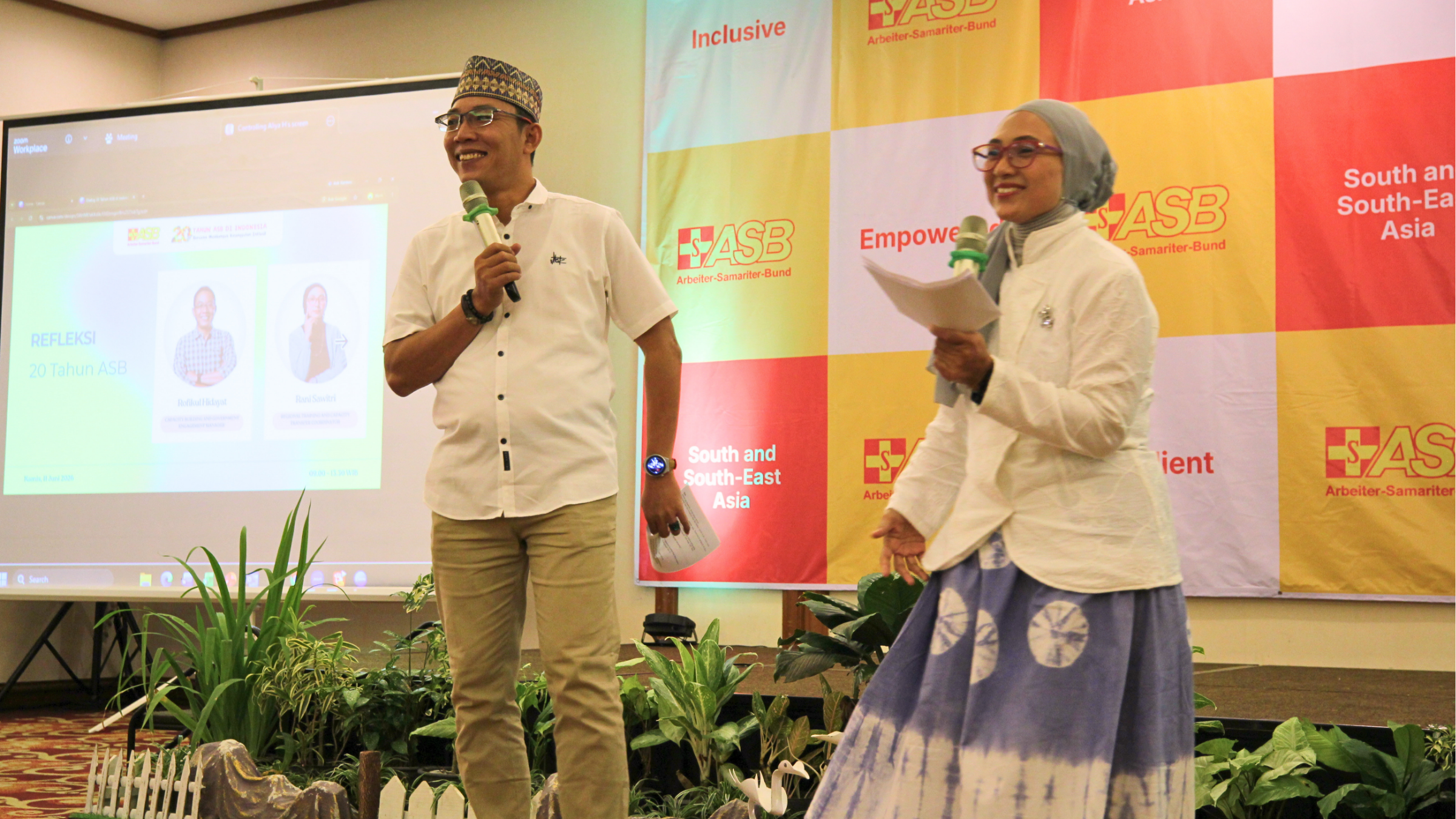
In 2007, ASB launched a school emergency preparedness programme that reached 2,047 primary schools across the Special Region of Yogyakarta. “If every school has just one enthusiastic teacher, that’s already 2,047 agents of change!” recalled Rani and Rofikul, two senior ASB staff members who call themselves the “living artefacts” of the organisation’s journey since 2007, in a nostalgic presentation that opened the event.
From here, awareness of the importance of involving those most at risk grew into a core foundation. ASB went on to establish itself as a pioneer of inclusive Disaster Risk Reduction (DRR). In 2012, ASB and several other international organisations founded the Disability-inclusive Disaster Risk Reduction Network (DiDRRN). Expansion continued to the Philippines and other countries in South and South-East Asia, with a widening scope of work that now covers climate action, socio-economic empowerment, and integrated humanitarian response.
Today, ASB is known for its Five Inclusion Mandates, which guide governments and NGOs/CSOs in developing programmes grounded in inclusion: identification and disaggregated data, accessibility, meaningful participation of persons with disabilities, capacity building, and protection priorities.
Honouring Dedication, Celebrating Partnership
The room was filled with emotion as all participants paid special tribute to the late Melina Margaretha, Country Director of ASB Indonesia and the Philippines from 2016 to 2021. “Her dedication and passion helped ASB grow and create wider impact,” Rani recalled.
The event was also a moment to recognise the inclusion champions who have walked alongside ASB over the years. Symbolic awards were presented to:
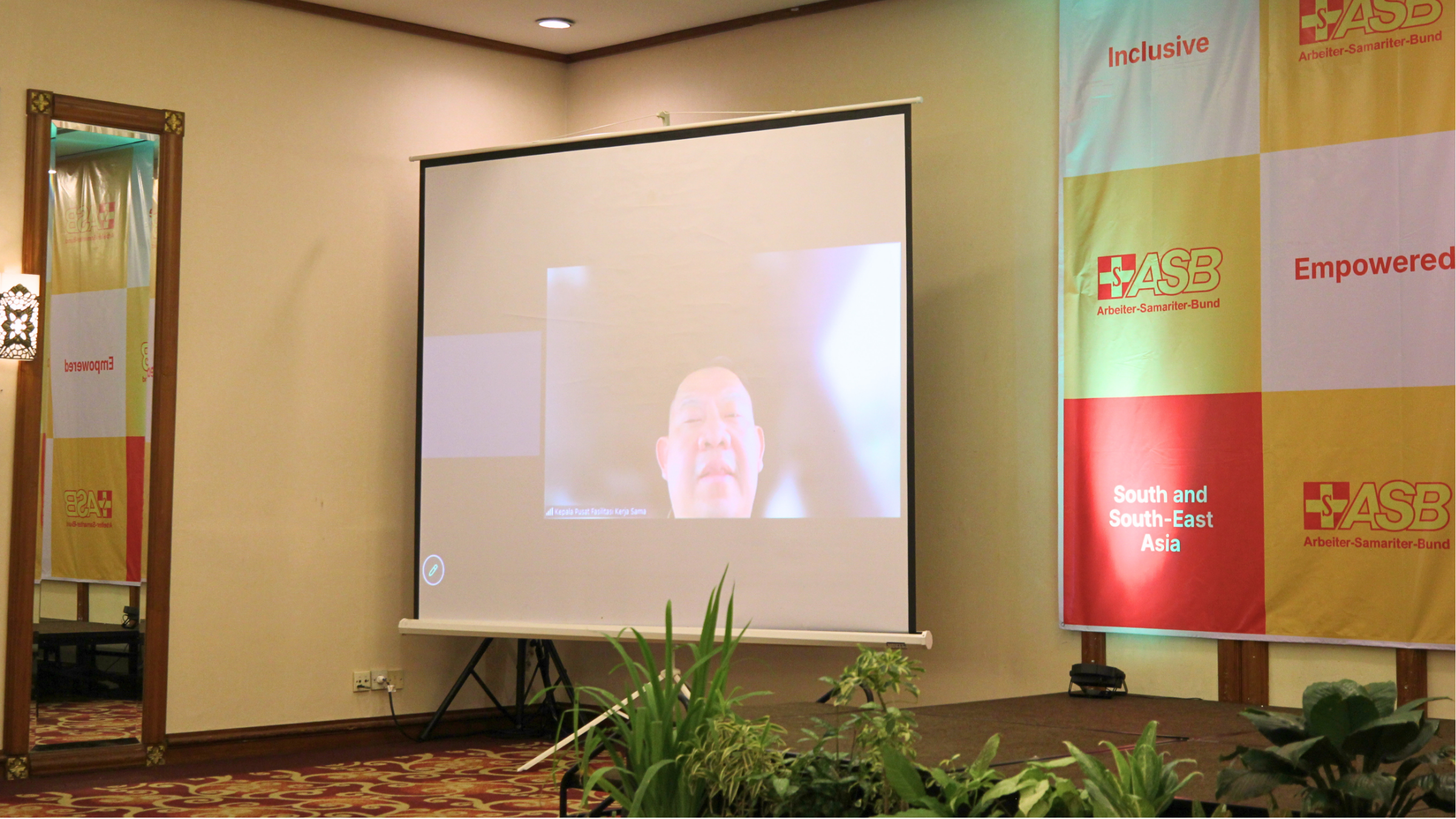
- The Ministry of Home Affairs, a frontline government partner whose unwavering trust and support have allowed ASB to keep working in Indonesia. “Strategic partnerships with organisations of persons with disabilities and local governments have strengthened disaster governance and regional development that prioritises at-risk groups,” said Ahmad Fajri, S.H., M.H., Head of the Centre for Cooperation Facilitation at the Ministry of Home Affairs, in his online remarks.
- FIDAKAMA, the most active OPD partner, which has transformed into a leader of its own organisation, become financially independent, and made history as the first OPD to sign the Climate and Environment Charter.
- Paluma Nusantara, a loyal partner since 2016, which has consistently created real impact through its distinctive community organising approach called “Balam” (Experience-Sharing Groups).
- Fauzi Al Khomsani, who received the Lifetime Achievement Award for nearly two decades of tireless service as ASB’s longest-serving staff member, a journey he began as a security officer.
Voices of Change from the Grassroots
The impact of ASB’s 20 years isn’t only recorded in annual reports; it is also reflected in changes in partners’ capacity and mindsets. Through the interactive Mentimeter platform and a reflection board, stories of transformation from the grassroots were gathered.
“That persons with disabilities can no longer, and must no longer, be underestimated,” one participant wrote. “It has changed a lot, especially everything related to inclusivity. Before, I had never interacted with friends who face barriers. Now I really care about it.”
Greater knowledge of disability and DRR, stronger capacity to facilitate inclusion, and shifts in perspective were the most prominent themes. “Inclusion is becoming known to everyone,” another participant said.
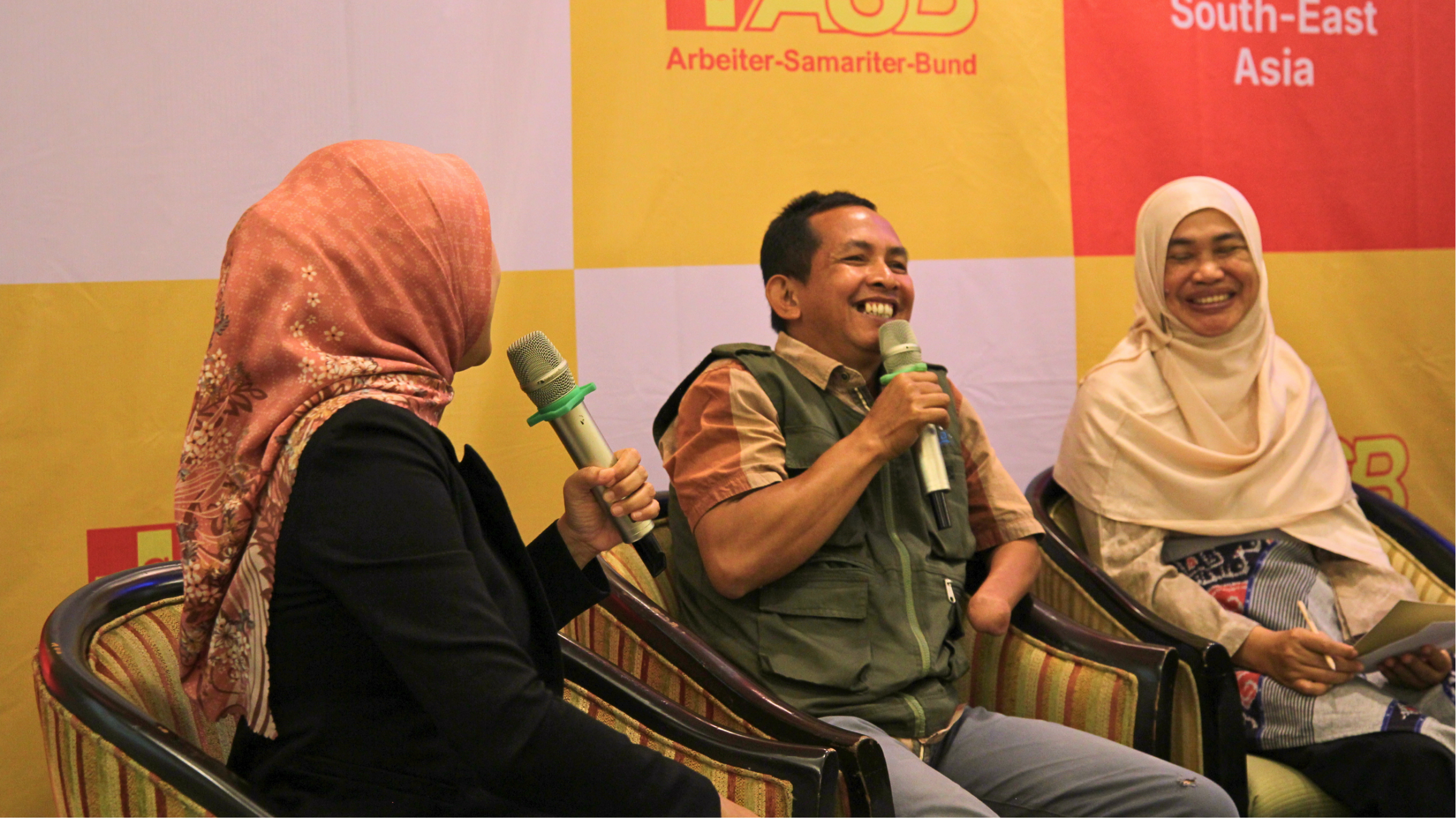
Kasihan, an inclusion activist from FIDAKAMA who was also a speaker in the talk show, shared the transformation his organisation has gone through: “Most of the villages we support now consistently allocate village budget (APBDes) funds for inclusion activities. Inclusion must be there: persons with disabilities can play a role in decision-making in village government.”
Winda Cattleya, a civil servant at the Ministry of Housing and Settlement Areas, described a turning point after ASB invited her to the World Conference on Disaster Risk Reduction in Sendai, Japan, in 2015. “I learned how to help friends with disabilities take a taxi and visit a temple. I also learned my first sign language from a Deaf friend. From there, I brought the issue of inclusion into the ASN Inklusi (Inclusive Civil Servants) network.”
Ditya Putri Pertiwi, an academic at Universitas Gadjah Mada (UGM) who began her career as a DRR trainer at ASB, reflected on her journey: “Honestly, back then I didn’t know what ASB was. I learned from ASB. Now, inclusion has become an important principle and value in every field.”
Meanwhile, Umi Azizah from Paluma Nusantara admitted: “In our proposals we always said ‘inclusive,’ but after partnering with ASB we realised that what we were doing was not even a fraction of it. Inclusion was just lip service. At ASB, we learned to show evidence of inclusion and put it into practice.”
Internal Stories: “Stories of Change: From, By, and For Us”
The second talk show featured three ASB staff members whose stories were selected from 22 stories of change collected. Kak Mengti, who joined in 2021, shared her first experience in Palu: “I learned to listen, and to ask how I could support friends with visual disabilities. Working with our OPD partners led me to reflect that humanitarian work is, in the end, about treating people as human beings.”
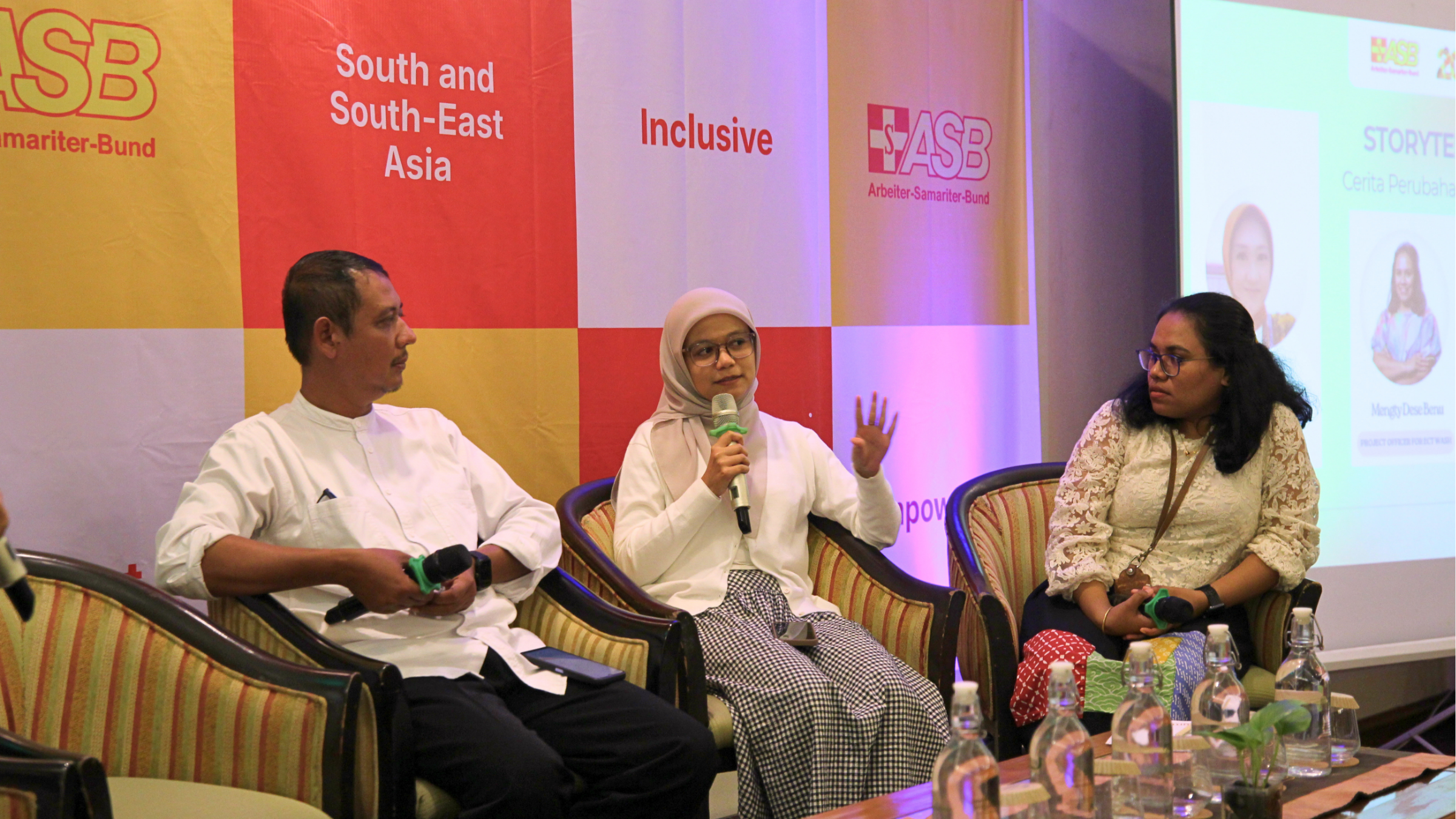
Kak Ani, a finance assistant who joined in 2024, shared her first time going directly into the field during an emergency response: “Usually I only see things through numbers and reports. But when I went to the field and saw the affected communities, mothers carrying jerry cans, children around the water distribution site, I was moved. Those numbers turned out to be far more human.”
Mas Fauzi, the longest-serving staff member since 2007, recounted his journey from security officer to being involved in many ASB programmes. “I just thought, this is a big organisation, I have to give it my best. But over time, I learned about Sky Hydrant and other programmes. It’s like an old motorbike full of memories,” he said with a smile.
Looking Ahead to the Next Two Decades
At the end of the event, participants formulated five strategic recommendations for ASB’s future direction. First, expanding programme impact and reach: extending work into new areas and disaster-prone regions with national significance. “Bring inclusion to all of Indonesia” was one hope that resonated across the room.
Second, strengthening collaboration and partnerships with government, NGOs, CSOs, and OPDs, including joining humanitarian coordination platforms such as the Indonesia Humanitarian Coordination Platform (HCP).
Third, consistency and leadership on inclusion. “Don’t stop until Indonesia is inclusive,” one participant wrote. ASB was encouraged to remain a pioneer of inclusive DRR and to mainstream disability inclusion in every programme.
Fourth, empowering and ensuring the participation of high-risk groups by giving greater space to persons with disabilities, women, and young people, not merely as beneficiaries but as actors and decision-makers.
Fifth, strengthening programmes and thematic innovation. Some participants recommended that ASB begin leading on inclusive climate resilience: “If the first 20 years focused largely on inclusive DRR and humanitarian work, then the hope for the next 20 years is that ASB can lead on inclusive climate resilience.”
Closing: Resilience Is Only Possible When It Is Inclusive
As Ahmad Fajri from the Ministry of Home Affairs emphasised in his speech: “True resilience can only be achieved when everyone, including persons with disabilities, older people, pregnant women, children, and other marginalised groups, is involved, heard, and has their rights upheld.”
For Indonesia, a country surrounded by disaster-prone landscapes, exclusive resilience is impossible. Building an inclusive, empowered, and resilient society is not just a dream or a slogan, but an absolute necessity to ensure that everyone has an equal place, access, and opportunity to survive and thrive.
Twenty years may be seen as only the early stage of maturity. But for ASB, this moment is a solid foothold from which to go further, making sure no one is left behind.
As Kak Lily said in her closing: “We’ve learned that whatever the area of work, disability inclusion will always be the anchor that guides ASB’s direction forward.”
Happy anniversary, ASB.
